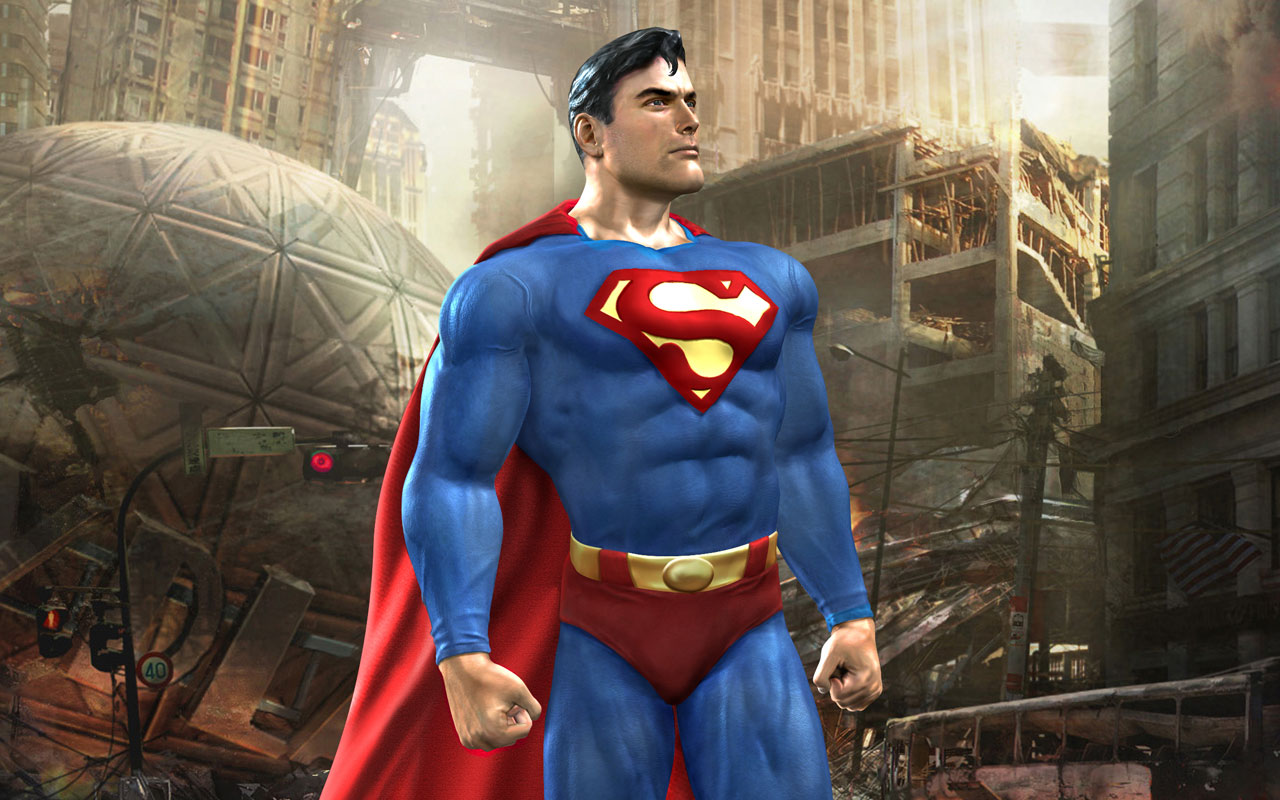
A few days ago, a member of the Toonzone Forums created a thread asking the question “Should Rocksteady make a Superman video game?”
“How about it, Rocksteady? Where’s my game? There are, like, 20 Batman games and only, like, 3 Superman games! What’s the deal? Do you have to wear a long pointy eared cowl and drive a cool car to star in a Rocksteady game?”
Without a doubt, the most common statement that I’ve heard from people saying why a Superman video game wouldn’t work is this one:
“The problem with Superman is that he’s almost invincible and all of the foes he would have to fight would need to be at boss-level since regular henchmen would be nearly useless against the man of steel.”
or
“Superman is boring and lame because he has a ton of super powers and he can beat anybody, but Batman is awesome because he has no powers and he can beat everybody!”
Sense no make. Sense no make.
Seriously? Superman boring and lame because he has powers? Son Goku (from Dragon Ball/Dragon Ball Z) is very similar to Superman in terms of powers and abilities, and yet I never hear anyone saying that Goku is too powerful to star in a video game. Heck, there are literally dozens of DBZ games out there currently. Samus Aran from Metroid has powers, but no one says that those games suffer because of that. Having super powers is part of what makes Superman cool. Come on! Supes can friggin’ fly! Flying is cool! That alone is reason why Rocksteady should make a Superman video game. Thus begins my proposal. I believe that a Superman video can work, and that Big Blue is capable of doing more than just flying through floating golden rings and beating up a tornado.
These “issues” with Superman are minor and could easily be dealt with with a certain degree of thought and creativity. For example, Superman can be hurt by someone in his strength class and is vulnerable to magic. The issue of Superman’s powers can easily be rectified in any one of the following ways:
1. Have Superman start out with only a limited amount of strength and powers, so that he would gain more abilities and become stronger as the game progresses.
2. Emphasize Superman’s other abilities besides fighting. Give Superman a series of missions, such as stopping a speeding locomotive from falling off of a damaged bridge or finding several bombs hidden in various parts of Metropolis or saving several citizens from an erupting volcano. Also, the missions could be timed so that Supes only has a limited amount of time to succeed in the missions or else he loses a life or something. Every level of the game doesn’t have to have Supes going a few rounds with a villain.
3. Have the game focus on a younger Superman who is relatively new to the super hero scene and as such, Clark’s powers wouldn’t be fully developed yet. Again, Supes’ strength could increase and he could gain more super powers as he progresses through the game.
4. Have Superman’s more devastating powers, such as heat vision and ice breath, reserved as special moves which can be used, but using them would lower his life bar, so the player won’t be able to just use them all of the time, and should mostly save them for extreme situations.
5. Give Superman a Super Meter, which would gradually build up whenever Supes punches or kicks an opponent. Once the Super Meter if full, Supes would be able to unleash a devastating super power, but the Super Meter would empty as he’s doing it. Also, Supes would have to start each new level with an empty Super Meter.
Today on Player Two Start, we pay tribute to Capcom’s much admired crossover fighter, X-Men VS Street Fighter.
Let’s take a little trip down Memory Lane. The year was 1996. One afternoon our younger brother Chaz (also known as CJP from the Otaku Gamer Spot–there, I plugged your site, bro, don’t say we never did anything for ya!) came home from school and informed us that a friend of his had told him that there was a new arcade game out in which the X-Men took on the characters from Street Fighter II. Naturally, we assumed he was pulling our collective legs, but after he loosened the snow tire chains from our ankles, a few days later we all headed out to the news/magazine stand at our local mall, and sho’ ’nuff, there was an issue of Electronic Gaming Monthly (this was back when there still were monthly game magazines, in the days B.I.–Before Internet) confirming that X-Men VS Street Fighter did indeed exist. One day, we’ve gotta pay our bro the 5 bucks we owe him. It’ll happen one day…..
And cue the eye-popping intro:
For the uninformed, X-Men VS Street Fighter was originally released as a coin-operated arcade game in 1996. It is Capcom’s third fighting game to feature Marvel Comics characters (the previous 2 being X-Men: Children of the Atom and Marvel Super Heroes, which Jason already covered in the very first Videots) and the first game to match them against their own, with characters from Marvel’s X-Men franchise being matched against the cast from the Street Fighter series. It was the first game to blend a tag team style of combat with the Street Fighter gameplay, as well as incorporating elements from Capcom’s previous Marvel-themed fighting games. The teams’ respective rosters went thusly:
Street Fighter: Akuma, Cammy, Charlie, Chun-Li, Dhalsim, Ken Masters, M. Bison, Ryu, Zangief
(I was a little disappointed that the my 2 favorite X-Men at the time, Jean Grey and Beast, were left out, but they at least appeared in various spots in the game: Jean was seen and mentioned briefly in Chun-Li’s ending, and Beast could be spotted in one of the backgrounds, sitting next to Blanka by a campfire. EDIT: That visual was actually from Marvel Super Heroes VS Street Fighter, the sequel.)
The plot (this game had a plot?) was that Ryu, during his travels, crosses paths with Cyclops and the X-Men, who show interest in Ryu’s power. When Apocalypse appears, stronger than ever before, Ryu’s friends and the X-Men band together to combat Apocalypse, some for the purpose of saving the world, and some for their own evil agendas.
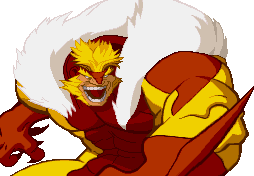
This game came hot off the heels of the Street Fighter Zero/Alpha series, so the SF characters were all in their Alpha forms, as evidenced by the big ‘Z’ which slammed across the screen whenever a Street Fighter scored the winning blow (clean up your minds!), as opposed to the big ‘X’ which would clunk on to the screen if the final victor was an X-Men character. Of course we all know that the Street Fighters wouldn’t stand a chance in a real battle against superpowered mutants, so to even the odds, all the SF characters’ attacks were buffed out, meaning Ryu was tossing fireballs the size and length of bullet trains. This game marks the first appearance of the “Shadaloo” depiction of Cammy, who would reappear in the console versions of Street Fighter Alpha 2 Gold, as well as in Street Fighter Alpha 3. Speaking of costumes, like many people around my generation, my first ever real exposure to X-Men was the 90’s Fox Kids cartoon; I knew of the comics, but never really read them thoroughly, so at the time I didn’t realize that Sabretooth was wearing a costume; I thought all that fur and shaggy hide was actually his body!
“Ya mean you thought I was walking’ around naked this whole time? Dude! I’m a bloodthirsty amoral sociopath, but even I got principles!”
X-Men vs. Street Fighter uses a system similar to the style developed in Marvel Super Heroes, and adds the tag team gameplay feature. Instead of the usual best-two-out-of-three round format, the game’s matches consist of two-on-two battles between tag teams. The player controls one character at a time, while the other awaits off-screen. The starting character can tag the waiting one in at any time by hitting the Hard Punch and Hard Kick buttons, which activates the “Variable Attack”; the tag partner will jump in with an attack and taunt briefly. During their taunt, they are vulnerable to counterattack. The dormant character will able to recover a portion of their vitality, while the current character is fighting. If one character loses all of their vitality, then the tag partner will automatically come to play. A match is over when both members of a team are defeated or if the timer on the match clock reaches zero.
There are other ways to bring the character’s partner in; the “Variable Counter”, which replaces the Infinity Counter of Marvel Super Heroes, breaks the player’s guard to bring the teammate in with a counterattack at the cost of a level of super meter. Also, the “Variable Combination” is a two-character Hyper Combo (the super moves featured in the game) which costs two levels, and will switch the player’s current character as long as neither character gets hit during their Hyper Combos.
In 1998, the game got a home console port for the PS1, which was just called the PlayStation at the time since there weren’t any others, but the PS version received mixed to negative reaction from fans, due to several frames of animation being cut, making the characters’ movements a tad choppy, slowdowns during the special moves that made the game essentially unplayable and worst of all, NO TAG-TEAMING! For the reason why, I refer you to our resident Tech Guy, Mr. Edgar Eaglebeak:
“Well, you see, the original PlayStation, or PS1 for you laymen, was a disc-based console. As such, the console’s RAM, or Random Access Memory, was significantly lower than that of the arcade cabinet. Every frame of animation of each character: their punches, kicks, supers, win/loss animations, what have you, needed to be stored onto the consoles discs and hard drive, and consequently loaded onto the game’s engine. However, the PS1 only had enough memory to store all of the animations for 2 characters to be on the screen at the same time, but as a 2-on-2 tag-team based combat title, X-Men VS Street Fighter required for there to be full animations for 4 characters at a time. So Joe Gamer would have had to choose between waiting long loading times each and every time they switched characters or simply contending with no tag-teaming in the main battle mode. Sony chose the second option. Instead, the PS version used a traditional best-two-of-three round setup in a similar manner to Rival Schools: United By Fate, with the player’s chosen partner only emerging on screen briefly as a ‘striker’, if you will, for Super attacks. However, it was possible to have a tag-team match through two-player “Crossover Mode”, provided that each player used a clone of their opponent as their partner. For example, if the player was controlling Ryu and his opponent was Wolverine, then the player’s partner would have to be Wolverine and the opponent’s partner would have to be Ryu. Now if you’ll excuse me, I must finish downloading the unreleased script for Man of Steel 2 from the internet and then resume my training for World of Warcraft. I’m a Level 42 Paladin!”
The was also a Sega Saturn version of the game, which was able to incorporate tag-teaming, since it was a cartridge based console, but I didn’t own a Sega Saturn nor did I know anybody who did, so I never got to play that version.
Apocalypse was the final boss of the game and lacked a tag partner. (No surprises there; the dude was freakin’ HUGE! Why would he need a partner?) After defeating him, the character that defeated Apocalypse was forced to fight his or her teammate (the game would not accept new challengers at that time). Once the CPU-controlled teammate was defeated, the game would show the player-controlled character’s ending. Or you could just view them here:
Ah, the 90’s cheese. I could listen to that hammy Kraftwerk synthesizer all night!
(But Ryu really thought he could just walk back to Earth from the moon? OK.)
So, hats off to X-Men VS Street Fighter. This game started the aeon flux of Capcom crossover titles (affectionately referred to as the ‘Capcom VS’ series) such as Marvel Super Heroes VS Street Fighter, Marvel VS Capcoms 1-3, Capcom VS SNKs 1 and 2, SNK VS Capcoms 1 and 2, Tatsunoku VS Capcom and others, but X-Men VS Street Fighter will always hold a special place in my heart since it was the first, and since I was huge mutant freak at the time. I’m still a mutant freak, but not as big an X-Men fan as I was back in the day. For making many peoples’ fanboy and fangirl fatasies come true and allowing me to assemble my awesome killer tag-team of Rogue and Storm to lay waste to my opponents, we at Twinsanity salute you.
Hello and welcome to a new segment on Twinsanity called Player Two Start!, where we pay tribute to the video games we spent our misspent youth playing.
-OK, it’s not really so much a new segment: Jason (Goldstar) did a video game salute waaaay back in the first year of this blog in 2010, back when the blog was called Astral City (Astral City? Yech! What were we thinking?!), but recently I decided to do a game salute myself, and since there’s now more than one, these game salutes can now become a recurring segment here. Why? Why not?
As with the previous Player Two Start entry, this is not a review. We don’t do game reviews here. There are already dozens of video game reviewers on the interwebz, both for new games and for retro/classic games, and all of them review games 20 times better than we ever could, so no lengthy detailed reviews from us. We just like to look back fondly on some of our favorite titles from time to time.
Today we’ll be looking at ADK’s lesser-known fighting game franchise, World Heroes.
World Heroes was a series of fighting games created by ADK originally created for the Neo Geo MVS arcade cabinets with the assistance of SNK, though some of the games in the series were also ported to the Neo Geo AES and Neo-Geo CD platforms, as well as some non-SNK platforms such as the Super NES and the Sega Saturn. First launched in 1992, it was one of several Street Fighter 2 clones of its’ day. While World Heroes didn’t have the excitement factor of SF2 or the blood ‘n’ gore factor of Mortal Kombat, or even the weapons melee factor of Samurai Shodown, WH had a standout feature of its’ own: goofy humor, crazy oddball characters and wacky extreme super moves. The premise of the the WH franchise (such as it is) is that a scientist named Dr. Brown (after Christopher Lloyd’s character in the Back to the Future movies, get it?), having perfected a time machine, organized a tournament for various fighters throughout all of history to combat each other. True to this plot, many of the fighters are based on actual historical figures, while some are fictional ones.
Games in the the World Heroes series:
World Heroes (1992)
World Heroes 2 (1993)
World Heroes 2 Jet (1994)
World Heroes Perfect (1995)
World Heroes Anthology (US title)/World Heroes Gorgeous (Japan title–yes, it was really called World Heroes Gorgeous, 2007)
In the first game, as was the case with many SF2 clones, there were 8 selectable characters: Hanzo, the Ryu of this game, a ninja based on the legendary ninja warrior Hanzo Hattori, Fuuma, Hanzo’s chief rival (imagine if Ryu and Ken were ninjas from rival clans and hated each others’ guts), based on based on the actual Fūma Kotarō, who allegedly killed the real Hanzo; in the ADK-verse, Fuuma stays in the present and becomes a office wage slave in a tiny cubicle–what?? as well as appearing in ADK’s Aggressors of Dark Kombat (its’ initials spell ADK–get it? GET IT???), Janne D’Arc, a 15th century French fencer based on Joan of Arc whose main goals are to be the strongest of all and to find a man (yay, feminism!), Kim Dragon, the resident “I wanna be like Bruce Lee!” character, J. Carn, the personal bodyguard of Ghenghis Khan, who becomes a tyrant in his own right, Muscle Power, a 20th century professional wrestler who bears more than a passing resemblance to Hulk Hogan, receding hairline and all, Rasputin, based on the philosopher of 13th century Russia, here portrayed as a sorcerer who preaches peace and love, and as the series progresses, becomes a full-blown homosexual stereotype (check out his Desperation Move in the video at 1:35 below for proof) and Brocken, imagine if someone combined the character Brockenman from the anime Kinkiuman with The Terminator, resulting in a uniformed German officer who also happens to be a killer cyborg from a dystopian future. The boss of the game was a character named Geegus, an obviously inspired by the T-1000 cyborg that was created by a secret organization called DAMD who can shapeshift into any of the eight fighters and use their moves at will. Geegus wants to destroy the Earth (hey, you’d want to destroy stuff too if your name was Geegus), so the World Heroes tournament was created to stop Geegus’ evil plans. I told you this game was wacky.
In the second installment, called–imaginatively enough–World Heroes 2, 6 more characters were added: Captain Kidd, a pirate based on the infamous William Kidd, wielder of shamanistic energy sharks and pirate ships hurled from his knuckles and possessor of one THE coolest video game stage tunes of all time, Erick, a viking based on Erik the Red, Johnny Maximum, a football pro based loosely on Joe Montana, described as a “killer machine” and a “demon quarterback” thanks to his cryptic dialogue and creepy glowing red eyes beneath his ever-present helmet, Mudman, a Pacific Islander wizard with a large wooden mask and no real historical basis apart from appearing primitive, Ryoko, a teenage Judo queen based on real-life judoka Ryoko Tamura (now Ryoko Tani) and Shura, a 25 year old Muay Thai fighter who has joined the tournament to prove his worth to his feared dead older brother (even though his brother is actually alive and well). The boss of this game is a alien being named Dio, described as “The Ultimate Thing”, while Geegus is reduced to sub-boss, but receives an upgrade to ‘Neo-Geegus’.
The third installment, actually an upgrade called World Heroes 2 Jet, introduced 3 new characters: Jack, think punk-rock Jack the Ripper, a punk serial killer with claws on his hands, Ryofu, a Chinese warrior based on the warlord Lü Bu of the Three Kingdoms era, and a new boss named Zeus, a musclebound loony with some of the worst cut-scene dialogue ever typed. The final new game in the series, World Heroes Perfect, introduced a sole new character, Son Goku, based on the famous mythological character Sun Wukong from “Journey to the West” (no, not the star of Dragon Ball, though that would’ve been a heckuva crossover). It also features an interesting final boss fake-out: in the final bout, you face off against Zeus from WH2 Jet for one round, at the start of round 2, Zeus then gets trashed by the true final boss, an upgraded Dio now called Neo-Dio. (Question: if Dio is “the Ultimate Thing”, then why did he even need to go Neo??)
While World Heroes never achieved the success or notoriety of Street Fighter or Mortal Kombat, it nonetheless had its’ charms, such as boasting some truly awesome music. Give a listen to some of these tracks:
Idly, one has to wonder why this series has yet to receive a revival, in this age of old game franchises getting reboots and relaunches. If the old Capcom DuckTales game for the NES has gotten a new version released, why the heck has no one tried to revive World Heroes? A new WH game with those nutty moves and quotes, done in the Street Fighter 4 style? I’d play that; wouldn’t you?
So here’s to you, World Heroes. You may not have gotten the attention or the accolades of other fighting games of your time, but when I was bored in my living room playing video games, you gave me a good chuckle and killed a tedious afternoon, and for that, we at Twinsanity salute you.
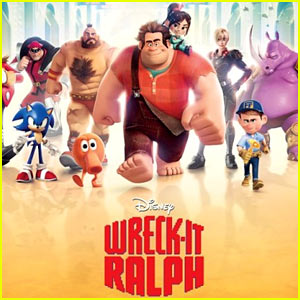
Disney’s Wreck-It-Ralph, the story of a big, burly but lovable video game villain (voiced by Walk Hard/Stepbrothers/Check It Out! with Dr. Steve Brule comedian/actor John C. Reilly) who just wants some respect and ends up getting so much more, earned an estimated $130,248,000 in North America, and $35,700,000 in other countries, for a worldwide total of $165,948,000. In North America, the film debuted with $13.5 million, an above-average opening day gross for an animated film released in November. During its opening weekend, the film topped the box office with $49 million, marking the largest debut for Walt Disney Animation Studios, ahead of Tangled‘s opening ($48.8 million).
I myself am an extremely casual gamer (I probably play an average of 1 or 2 games per year, though I watch a lot of game reviews and am a regular viewer of The Game Overthinker), but my general video game illiteracy didn’t prevent me from enjoying this movie. So far, I’d say that Wreck-It-Ralph is probably my 2nd favorite movie of 2012, topped only by The Avengers, and given how there are already Wreck-It-Ralph toys and tie-ins, Ralph himself cameos in the latest Sonic the Hedgehog racing game and costumed mascot versions of Ralph and Vanellope Von Shweetz (the ‘glitchy’ star of neighboring racing game Sugar Rush voiced by comedienne Sarah Silverman) have already been planted at Disney theme parks, it’s safe to assume that others enjoyed it as well.
I’m not going to review the movie itself, as I generally don’t do film reviews, since there are already dozens of people on the internet who do movie reviews and all of them do it 20 times better than I would, however I will list some of the ‘hidden’ bits, allusions, trivial facts and character cameos that were sprinkled throughout the film. Director Rich Moore determined that that for a film about a video game world to feel authentic, “it had to have real characters from real games in it”, thus Wreck-It-Ralph and his pixelated brethren inhabit their own world within the arcade, interconnected by a massive hub known as Game Central Station. GCS is brimming with a galaxy of characters and idioms from the gaming world, so there are a lot of things that you may have missed the first time. (I didn’t spot all of them right away, either).
First, the obvious facts about the fictional games within the movie:
Ralph’s game, Fix-It-Felix Jr., is a homage of 8-bit classic arcade games such as Donkey Kong. The story of Fix-It-Felix Jr. not only establishes Ralph’s counterpart Felix as the resident “golden boy” hero of the game, but also helps the movie audience identify and sympathize with Ralph: the game’s into depicts Ralph as a giant-sized backwoods yokel who’s living peacefully in a stump on his own property, when a deluxe luxury apartment is constructed around him, forcing Ralph off his land and into the junkyard just to the right of the screen. Enraged, Ralph proceeds to climb to the top of building and demolish the place from the roof down with his bare hands (“I’m gonna wreck it!”). This brings in the hero of the game, Fix-It-Felix Jr. (voiced by 30 Rock‘s Jack MacBrayer), the building’s beloved superintendent, armed with a magic golden hammer that can repair anything with just a tap, to fix the damage that Ralph wreaks (I can fix it!”). In the game, Felix hops and jumps across the building’s ledges a la Mario (fun trivia fact: Mario’s original name was Jumpman).
The first game Ralph ‘game jumps’ to, Hero’s Duty, is a grim, dark, edgy and violent First Person Shooter (FPS) in the mold of games such as Halo and Call of Duty, with some traces of Metroid. The main character of Hero’s Duty, Sgt. Calhoun (voiced by Glee‘s Jane Lynch) is not only reminiscent of Ripley from the Alien movies, but she may also be a sort-of homage to Metroid‘s Samus Aran, who likewise wears a high-tech suit of armor. (At the end of the original Metroid for the NES, if the player defeated the entire game on difficult, then Samus’ armor would disappear, revealing Samus to be a woman.)
The second game Ralph jumps to (and where he meets Vanellope), Sugar Rush, is a mix of the popular children’s board game Candy Land and the Super Mario Kart racing game series.
Now, some of the more obscure stuff:
The song “Wreck It, Wreck-It-Ralph”, performed over the movie’s closing credits, was composed by the duo of Buckner & Garcia, the same pair who wrote “Pac-Man Fever” back in the 1980’s.
The theme song for Sugar Rush, also heard over the closing credits, was performed by an actual J-Pop band, AKB48.
Speaking of music, real life dubstep musician Skrillex makes a non-speaking cameo in the movie; he’s the DJ at Felix’s 30th anniversary party.
At the movie’s opening, in Litwak’s Arcade, one of the game cabinets seen is the original Teenage Mutant Ninja Turtles arcade game.
After Litwak’s closes, the character who announces that all is clear is Yuni Verse from Dance Dance Revolution.
The bar that Ralph visits after the party scene is Tapper’s Tavern. Tapper is an old arcade title from the early-to-mid 80’s, in which the player controls a bartender whose goal is to slide mugs of beer over to his patrons.
The chef seen in the kitchen of Tapper’s Tavern is Peter Pepper, the main character of the 80’s video game Burger Time.
One of the items that Ralph finds while digging through the lost-and-found box at Tapper’s is the exclamation point (!) that appears over the head of Solid Snake in the Metal Gear Solid games, complete with the accompanying sound effect. He also comes across a red mushroom from Super Mario Brothers.
Game Central Station is riddled with graffiti reading “Aerith Lives”, a reference to the character of Aerith Gainsborough from Final Fantasy VII, who is killed within the story of the game and spawned the internet meme “Aerith Dies”.
Other graffiti scribblings include “All your base are belong to us,” (an engrish phrase popularized from the game Zero Wing), “Sheng Long Was Here,” (referencing an April Fool’s joke around the made-up character Sheng Long from Street Fighter), and “Jenkins” (a nod to the popular Leeroy Jenkins meme from World of Warcraft).
There is a rumor that Mario and Luigi were originally supposed to appear in the movie, but didn’t because Nintendo wanted too high a fee for their usage, but the actual reason was that the producers couldn’t think of a reasonable way to incorporate Mario into the movie without it looking like he was shoehorned in. Mario does get a causal mention in the movie: when Ralph knocks on the door of Felix’s apartment during his party, Felix says “Must be Mario. Fashionably late as usual.”
Pac-Man is seen as a guest at Fix-It-Felix’s party. The 4 ghosts, Blinky (red), Pinky (pink), Inky (blue) and Clyde (orange) can be seen turning a corner in Game Central Station.
Dr. Wily from the MegaMan (Rockman) games was originally set to appear in the move, but didn’t.
7 characters from Street Fighter II appear in the film: Ryu, Ken, Chun-Li (both in person and as a drawn caricature on the walls of Tapper’s Tavern), Cammy, Zangief, M. Bison and Blanka (during the closing credits).
The guard in front of the restricted bonus level of Sugar Rush is Beard Papa, the mascot of an international chain of cream puff stores started in Japan by the company Mugino Co., Ltd.. Their slogan is “Fresh’n natural cream puffs”. Beard Papa’s has over 250 stores in Japan and 300 worldwide.
King Candy’s palace guards are a pair of doughnut cops named Winchell and Duncan. Aside from being a walking joke on the stereotype of cops loving doughnuts, they’re both named after popular doughnut franchises: Winchell’s Doughnut House and Dunkin’ Dounts, respectively.
Turbo Time, a fictional game within the story, is based on arcade racing titles such as Pole Position. The actions of that game’s main character spawned the in-universe expression “Going Turbo”, which refers to when a game character decides to abandon their respective game.
When a game is broken, it’s arcade cabinet is taken away, and the game’s inhabitants are rendered homeless. Characters from Q*Bert: the title character, Q*bert, Coily, Slick, Sam and Ugg are shown as homeless characters who are later taken in by Ralph and Felix into their game.
Also present at Game Central Station: the title character from Paperboy, a Puka, a Fygar and the title character from Dig Dug and the 2 paddles from Pong and the Qix from Qix.
Many of the established game characters are voiced by their current voice actors: Roger Craig Smith as Sonic the Hedgehog, Kyle Hebert as Ryu, Reuben Langdon as Ken Masters and Gerald C. Rivers as M. Bison (or Vega or Dictator, depending on which side of the pond you live on). Zangief is voiced by the film’s director Rich Moore, who also voiced King Candy’s henchman, Sour Bill.
When King Candy hacks the code to Sugar Rush, the door to the code is locked with a NES control pad. King Candy unlocks it by pushing the buttons Up, Down, Up, Down, Left, Right, Left, Right, A,B,A,B, Start. This is the infamous Konami cheat code used in many Konami games, including Gradius and Contra for the NES (Nintendo Entertainment System), and it was also the fake code posted by Electronic Gaming Monthly which claimed to allow players to play as Simon Belmont (the hero of Castlevania) in the NES version of Ninja Turtles 2: The Arcade Game, and one of EGM’s first and most notorious April Fool’s jokes.
When the rocket that Ralph falls into careens through Game Central Station, it knocks Sonic onto the floor, causing all of his rings to fly out like in his respective game.
And finally, we come to the scene in which Ralph attends Bad-Anon, a support group for video game villains, one of the first scenes in the movie leaked to the public and arguably one of the most popular scenes in the movie.
There are numerous game baddies in attendance here, some you’ll instantly recognize and others you won’t:
Some are obvious: Bowser (aka King Koopa) from Super Mario Bros., Zangief and M. Bison (Vega/Dictator) from Street Fighter 2, Dr. Eggman (or Robotnik) from Sonic the Hedgehog, and Bad-Anon’s leader and mediator, Clyde, the orange colored ghost from Pac-Man. (Interesting that the producers would choose him for this role when in most of Pac-Man’s publicity, Clyde is often portrayed as the least intelligent of the ghosts.
Less obvious characters:
The yellow robot with the buzzsaw hand is one of the enemies from the Sega Genesis’ Cyborg Justice.
The thuggish looking cyborg with the arm tattoos and infrared eye implant is based on Kano from Midway’s Mortal Kombat, though he’s not officially named as such.
The zombie is based on Cyril from House of the Dead.
The purple rhino creature is Neff from Sega’s Altered Beast.
The other 4 characters: Satan, er, um…Satine (the red devil), the ninja, the floating green blob monster with the crown and this sexy elf-eared blue lady, are apparently not from any actual games, but rather were simply added to fill out the numbers. Jason (Goldstar) suggested that if the filmmakers wanted a female video game villain, they could have used the Dark Queen from Battletoads, which would’ve been a good idea, but since I like looking at the blue chick, I’m not going to file a complaint. I’ve unofficially named her Lady Cassandra from a game called Monsters, Magic & Mayhem, but you don’t have to.
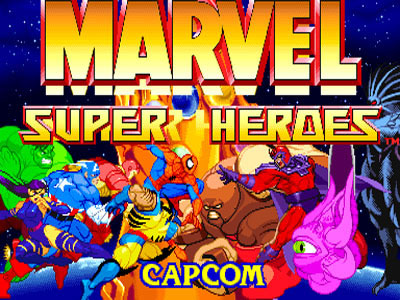
Here at Twinsanity, we sometimes like to pay tribute to things that we like, but don’t be deceived by what your about to read here. I don’t review video games. I’m not the Angry Video Game anything. There are already plenty of game reviewers out there, many of which are much better at that sort of thing than I could ever be. So no, this is not a game review. I’m merely taking this time to pay tribute to one of the most fun, and most underrated video games of all time: A little one-on-one fighter from Capcom known as Marvel Super Heroes.
Marvel Super Heroes made it’s arcade debut in 1995 and was released for the Playstation and the Sega Saturn in 1997. I played the game in the arcade and was downright giddy when the Playstation version of the game came out. While most of the gaming world has fully embraced Capcom’s later fighting titles such as Marvel VS Capcom and especially Marvel VS Capcom 2, MSH kind of got left behind in the dust afterward. Despite this, MSH remains one of my all time favorite games to this day. If you doubt me, just check out the awesomeness of the game’s opening cinema:
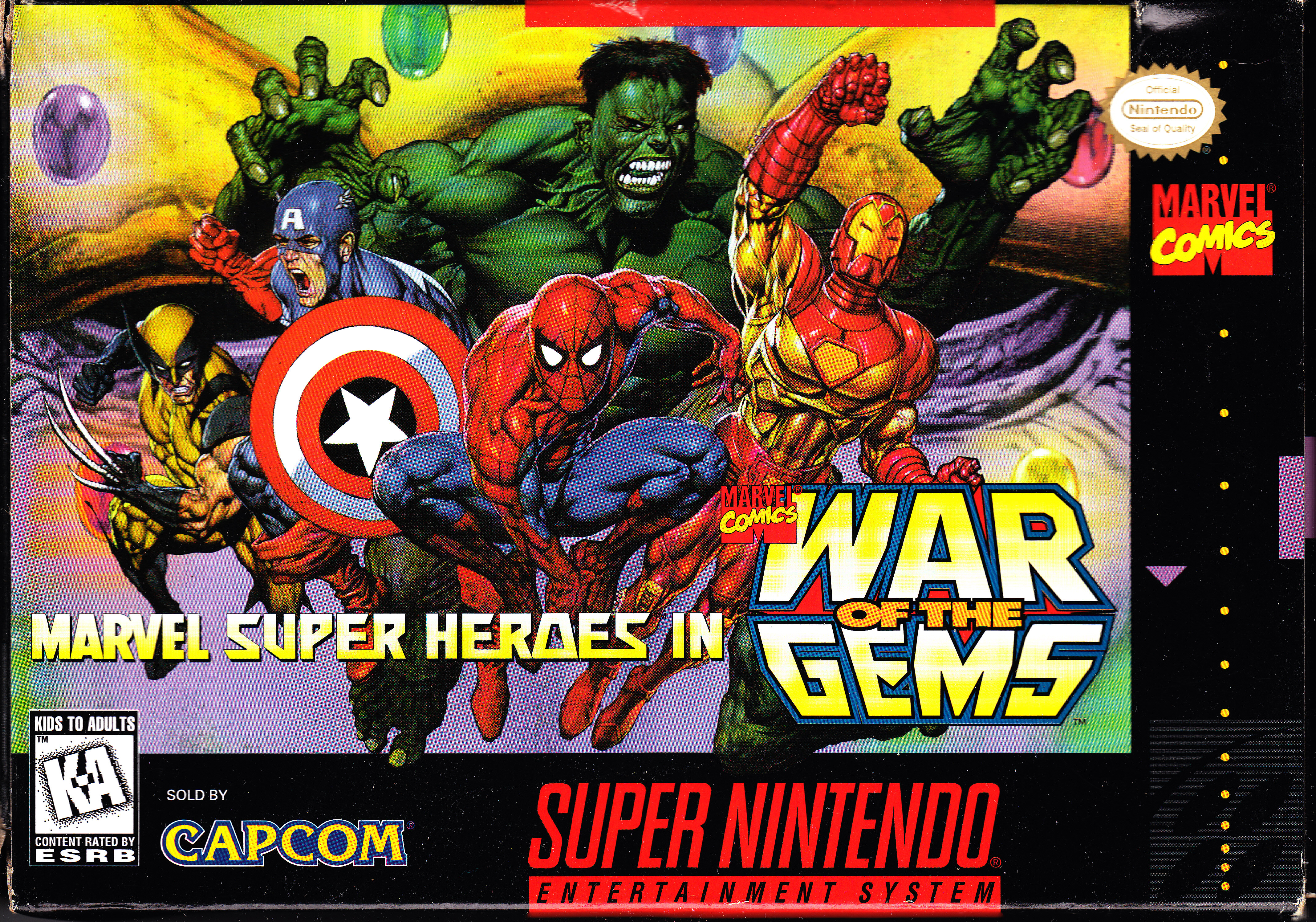
Anyone who hasn’t played this game yet, find a copy and play it now! You won’t regret it. One piece of advice, though: When searching for MSH, do not under any circumstances, confuse it with this title:
This is not Marvel Super Heroes. This is Marvel Super Heroes: War of the Gems, a game for the Super Nintendo which is actually a retread of an earlier SNES title, X-Men Mutant Apocalypse, only with a slightly altered story and some different characters. Don’t get me wrong, Mutant Apocalypse is actually pretty fun, but if you rent or buy this game under the belief that you’re getting the arcade classic, you’ll be in for a disappointment. That said, on to the real MSH:
Marvel Super Heroes features 10 selectable characters; 6 super heroes — Spider Man, Captain America, Hulk, Iron Man, Wolverine and Psylocke– and 4 villains — Magneto, Juggernaut, Blackheart and Shuma Gorrath (the latter 2 I’ve never heard of before playing this game. Sorry, comic book fans!) In the Street Fighter tradition, there are also 2 bosses– Dr. Doom is a mid boss and Thanos is the final boss. My only complaint about the lineup is why we got Cap and Iron Man but no Thor? And why only 1 female character? There are too many good woman characters in the Marvel universe for this game to only have 1. Each character has the requisite set of personalized special moves and super moves, here called “Infinity Moves”, which are all quite cool.
However, MSH’s standout feature is the inclusion of the Infinity Gems.
In the comics, the Infinity Gems grant their user near god-like abilities that allow you to rule the universe faster than you can say “God-like egomaniac!”, but in the game, they just enhance your fighter’s abilities in a unique way: The Space Gem causes your character temporary invulnerability. The Power Gem causes your attacks to deal out much more damage. The Soul Gem slowly replenishes your life bar. The Time Gem speeds up you character. The Reality Gem gives your character projectiles, and the Mind Gem fills up the Infinity Bar faster so you can bust out with a super move. Generally, an Infinity Gem is tossed into the fray after the 1st attack of the match. The Gem will land in the middle of ring, so your opponent has a chance to get it as well. Each gem grants it’s user special powers (as if the likes of Juggernaut and Magneto need to be more powerful!), and certain gems grant particular abilities to specific characters. The Reality Gem causes Blackheart to turn invisible. The Power Gem gives Captain America shadow moves. The Soul Gem causes Iron Man’s hits to strike with electric shock, etc. This was a very unique and innovative touch to the world of fighting games and so I’m truly surprised that this experiment was never repeated. Also, this is a minor nitpick, but I have to wonder why Capcom felt it necessary to change 2 of the Infinity Gem’s colors for the game. The Time Gem is orange in the comics, but it’s magenta in the game, while the Reality Gem is yellow in the comics, but it’s orange in the game! Ultimately, this change doesn’t make any real difference but still, it strikes me as curious why 2 of the gem’s colors were changed, while the colors of the other 4 were left unchanged.
Anyway, Marvel Super Heroes was a superb title with fun game play and a surprising amount of re-play value despite it’s lack of secrets and unlockable characters (Supposedly, there’s a Game Genie code that allows to you play as Anita from the Darkstalkers games, but it never worked for me. Whenever I tried it, it would always freeze up after the VS screen).
It remains one of the great mysteries of the gaming universe why this game never got a sequel (and no, I don’t count Marvel Super Heroes VS Street Fighter. The Capcom “VS” games were a separate series and are not connected to MSH, at least not to me. Also, I had some criticisms about MSH vs SF’s lineup. Did we really need to have Captain America and Cyclops? The way that they played, they were practically 1 entity!). It would have been great to have gotten a Marvel Super Heroes 2, especially if the lineup had changed some and we could have gotten Thor, The Thing, Human Torch, Silver Surfer, Storm, Scarlet Witch, Vision, Firestar, Ms. Marvel or even She Hulk as playable characters. Nonetheless, Marvel Super Heroes was a great fighting title for it’s time and it still holds up now, and for this, MSH, we at Twinsanity salute you.








 Twin Images
You must be logged in to post a comment.