As October is the month of Halloween, we here at Twinsanity wanted to cover something scary to commemorate the occasion. We thought back on all of the horror movies and suspenseful shows and chilling works of fiction we’ve read, but then we remembered something that never fails to send a chill down our collective spines: creepy TV production logos!
Most children of the cathode tube have at some point in their lives encountered them (usually during childhood): those sudden bursts of noise, light and strange, often unsettling imagery that pop up at the very beginning or end of TV shows and home videos, disturbing your equilibrium and sending you running out of the room screaming. Well, brace yourselves, ’cause Twinsanity presents for your viewing displeasure….Monster Killer Logo Theater.
First, we present the old Paramount Television end production logo, unofficially nicknamed the “Closet Killer” logo. I guess the music was supposed to make it sound majestic, but it just sounded like someone was sneaking up behind you with a blunt object.
Next, the Mark VII logo; older TV fans may remember it from Dragnet. Just who was that burly guy whose hands we saw chiseling the production logo? Hephaestus? The Brawny paper towels guy? Paul Bunyan? Some backwoods drifter with a thing for clobbering people with hammers? The mind boggles.
Up next is the Simitar Entertainment logo, scary due to its’ techno-industrial look and utter electronic loudness.
I swear, that’s going to be the national anthem of the Robot Uprising.
Don’t think letters are scary? Forget what Sesame Street told you about ‘S’ looking like a snake. This ‘S’ will freak you right out!
…And another Alphabet Killer, the scary V Juggernaut from Viacom.
“IT’S HEADED RIGHT FOR US!!!!”
On a similar vein, here’s the Group W productions logo. What is it with these killer letters anyway?
Next, this ident for the BBC, used from 1990 to 1997. What makes it unsettling is how bleak and maudlin it sounds for what’s supposed to be a simple station ID bump. Geez, did someone die?
“It sounds like a dirge. I love it.”
Next, the View Askew production logo. If there was ever a production logo worthy of the term “creepy”, it’s this one.
Next, those unsettling trumpeters from the opening of Davey and Golaith.
Those trumpeters were truly the harbingers of doom; not only did they seem to signify that death was right around the corner, but they did something even worse: heralded the arrival of another episode of Davey and Goliath!
Next up, not a production logo, but still a notorious chiller from my childhood, the opening sequence from TV’s Nanny and the Professor from 1970-71. I’ll be honest here: I remember very little about this show for the simple fact that the floating animated cape from this opening would always send me screaming out of the room.
Finally, we’ve saved the worst for last. If you think your heart can handle it, try and sit through the BND logo from 1990 without flat-lining:
Imaging THAT coming on to your screen in a dark room. If your kids come screaming into your bedroom while leaving behind trails of urine in the halls, you’ll know why. If you see this creepy head anywhere, don’t look, don’t blink, don’t think, just RUN!!!!!
Welcome to a new segment on Twinsanity titled Beyond the Background, where we give obscure, forgotten or less celebrated characters a moment in the spotlight. In this edition, we’ll be going back to Saturday mornings in the 1980s. Do you remember the Shirt Tales? In case you don’t, the Shirt Tales was a SatAM cartoon produced by Hanna-Barbera that ran from 1982 to 1984 and was based on characters from a line of popular greeting cards, not unlike the Care Bears. In fact, the Shirt Tales were quite a bit like the Care Bears, except that the Shirt Tales all wore T-shirts with cutesy messages on them instead of having symbols on their stomachs and the Shirt Tales used high tech to right wrongs and help kids and animals with their personal problems instead of using magic and sappy songs. Fans of the Shirt Tales cartoon undoubtedly remember the main team’s various members: Pammy Panda, Bogey the Orangutan, Tyg Tiger (with his signature “TOING!”- Seriously, what was up with that anyway?) and Digger Mole, but there’s 1 member of the team who seems to have slipped from some fans’ memories. I’m talking about the one time leader of the main Shirt Tales Rick Raccoon.
“Remember me? The creators of Robot Chicken obviously don’t!”
During the shows’ first season, the Shirt Tales were like a well oiled machine. Tyg provided the muscle. Digger had his talent for, well, digging. Bogey provided the Humphrey Bogart impression shtick and Pammy provided the femininity. Rick, meanwhile, was the brains. The team leader, and also the only one permitted to drive the Shirt Tales Super Sonic Transport (STSST).
But between season 1 and season 2,something happened. In the shows’ 2nd (and last) season, Rick suddenly went from being the acknowledged leader of the team to having almost nothing to do. He was even forced to hand over the keys to the STSST. The leadership position was given to Pammy, while Tyg now drove the STSST. They would have let Pammy drive, but, you know, women drivers.
No official reason was ever given for Rick’s demotion. One source claims that between seasons, Rick was seen selling secrets to the Critter Sitters, but this is as yet unconfirmed.
During Shirt Tales’ season 2 episodes, Rick would usually have a very small role or be altogether missing. Rick’s friends, in an attempt to justify Rick’s still earning a paycheck to the higher-ups, tried to find things for him to do him to do, such as monitoring the team’s missions, but Rick spent most of his time chillaxing in the team’s tree house HQ watching that hot new cutting edge MTV channel (this was 1984, you have to remember) and getting fat off of walnuts. The Shirt Tales were even forced to bring in a 6th member, Kip Kangaroo, claiming that they wanted a new member to train and to pave the way for future generations, but actually, they just need someone else to chip in for the rent.
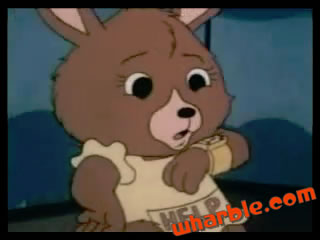
“Rent?!? Hey, man, no one told me about this! I’m just an intern!”
After the series ended, Rick tried to go freelance and head his own team, The Short Tales, just like the Shirt Tales, only they wore shorts, but this venture wasn’t nearly as successful. Somehow, people just weren’t keen on the idea of cute animals displaying messages across their asses. Of course, there’s always the chance that Rick can get his old job back if the Shirt Tales series is ever revived or rebooted. Hey, if Biker Mice From Mars can a reboot, anything’s possible!
Whenever I’m on message boards, invariably a thread will pop up by some hopeful tube watcher who wants to “save Boomerang”. These threads typically complain about the same things: Boomerang doesn’t show enough classic cartoons. My favorite old shows don’t air there anymore. I don’t like how they now show recently canceled Cartoon Network shows on there, and blah and blah and blah. And just as invariably these same threads will offer “solutions” on how to save Boomerang, usually involving trying to convince Da Boom’s parent companies, Turner Broadcasting and Time-Warner, to take all of the recent CN leftovers like Dexter’s Lab, The Powerpuff Girls, Johnny Bravo, Cow & Chicken, Samurai Jack, Teen Titans, Ben 10, Sidekick, Almost Naked Animals, etc., off of the channel and starting petitions to get the old 1960’s Hanna-Barbera ‘funny animal’ cartoons like Atom Ant, Wally Gator, Secret Squirrel, Top Cat, Pixie and Dixie, Touche Turtle, Ricochet Rabbit et al, back in regular rotation on Boomerang.
I find it interesting that so many peoples’ idea of “saving” channels like Boomerang, Cartoon Network, Nickelodeon and Disney Channel is just bringing all of their older shows back. While I try not to be ants at the proverbial picnic, I typically pass on any such movements. It’s perfectly fine with me if folks want to see Yakky Doodle and Breezly & Sneezly return to Boomerang, if that’s what floats your boat, then I say ride that rocket, baby, but don’t think that Hokey Wolf and Snagglepuss cartoons coming back to regular rotation on Boomerang would be saving the channel, ’cause resurrecting the old HB cartoons and saving Boomerang aren’t even close to being the same thing. It’s time to face the elephant in the room….
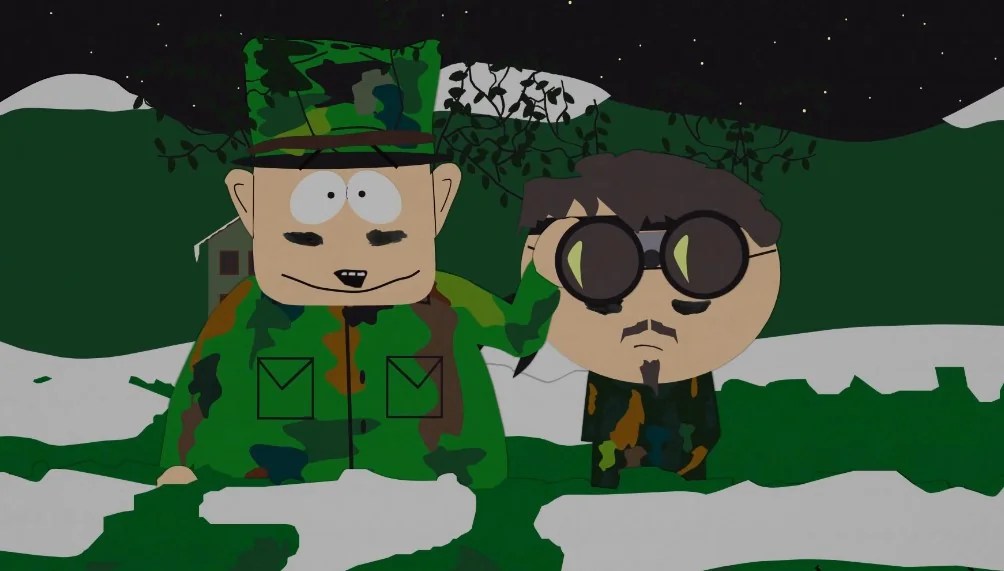
“Honk if you’re horny!”
(Should’ve seen that coming.) No, not that elephant; the one which no retro-lover wants to face: the harsh but very real fact that Boomerang isn’t a baby boomer channel anymore. Turner doesn’t feel the need to utilize the entire HB library since Boomerang is just Cartoon Network’s dumping ground for their canceled programming and the shows that CN once aired but have since gotten rid of but need to let their licenses run out. Let’s not confuse our wants with the network’s needs; you may want Turner to restore Boomerang back to the way it was in 2003 or 2004, but they don’t need to do that by any stretch of the imagination. Bringing all of those old CN cartoons would make a lot of retro fans happy, sure, but it wouldn’t be saving Boomerang. Anyone who truly wants to save Boomerang should be trying to think of a way to get it into tons more homes, expose it to a much wider audience than’s it’s ever been exposed to, and most importantly, to make it profitable. Turner’s apathy towards Boomerang stems from the fact that Da Boom doesn’t make its’ parents any real money beyond subscription fees, and few people are willing to pay an additional fee on top of their basic cable/satellite service fee just to watch old cartoons. The reason that Boom is ad-free is because advertisers won’t go anywhere near it, as admen and accountants don’t want to run spots on a channel which doesn’t show anything new, since it’s been shown that newer and first-run shows attract greater numbers of viewers consistently than older shows and repeats of canceled shows.
Removing all of the post-1990 cartoons from Boomerang isn’t the answer, either. As much as it would make a lot of fans happy, Boomerang can’t just run Looney Tunes and old-school Hanna-Barbera toons from the 60’s through the 80’s for all eternity. Boomerang was created by Turner Broadcasting in order to move the older shows from Cartoon Network so that there would be more room on Toon’s schedule for premieres and newer acquisitions. Boomerang just gets the shows when they’re done airing on Cartoon Network or if they’re 3rd party acquisitions which Turner still has the broadcasting rights to. When Boom was launched in 2000, Toon’s schedule was mostly Hanna-Barbera reruns, so those shows were all moved to Boomerang. Now that it’s 2013, it’s the shows from 1990 to present that get moved over to Boom. The era in which the shows were produced doesn’t figure into Turner’s decision making at all. Boomerang aired some 1990’s cartoons during the 00’s and now they air some 2000’s cartoons in the ’10’s. That’s not a disgrace and an insult, it’s a natural progression. In the same manner that just bringing back the likes of Pixie & Dixie alone wouldn’t single-handedly save Boomerang, just adding the likes of Pokemon, Teen Titans and the 90’s era Cartoon-Cartoons to Boomerang isn’t single-handedly destroying it. It’s really a natural progression for Boom to keep adding newer shows to their rotation as time goes on. What’s considered “old” and “classic” varies from person to person and changes from generation to generation. Time, like an arrow, only moves in one direction, straight ahead, and as such the shows from the 90’s, 00’s and beyond can’t and shouldn’t be ignored. Yes, Boomerang is a retro channel, it at one time alleged to be the “home of classic cartoons”, but it’s beyond absurd to expect Boom to act like every cartoon made after 1990 doesn’t exist. Not only is complaining about Boomerang running post 90’s shows kind of pointless since they’ve been doing this for over a decade now, but expecting Boomerang’s entire schedule to consist solely of baby boomer era toons wouldn’t be helping the channel survive at all.
I understand why the boomers want to keep Boomerang purely cartoons from that era, but restricting Boom to nothing but Looney Tunes and HB cartoons from the 60’s through 80s just isn’t sustainable anymore; putting such limitations on Da Boom’s roster would ultimately do the channel more harm than good. Here’s why: over time, the baby boomers had babies of their own, and as much as some boomers want to stomp around demanding that Turner listen to them and only them, the Gen Xers, Gen Yers and Millenials, who are now in the late teens, 20s and 30s, get nostalgic too, and they want to see the shows that they grew up watching and remember fondly as well. Why should Boom only cater to the boomers, and not to them?
I keep hearing all this talk about people wanting to save Boomerang, but so few of the boomers are willing to share it. “Oh, Boomerang should be around to bring kids and parents and families together, as long as it only airs the cartoons that I grew up watching!” is about as hypocritical and self-centered a mentality as you can get. We can’t force our childhood memories onto today’s kids; it would be great if some of them gravitated to some of our favorite toons like we did (and indeed, some do), but at the same time, the succeeding generations need to be allowed to form their own childhood memories. Nostalgia occurs for every generation and no one generation is superior to any other. I’ve said this before, but just bringing back Pixie & Dixie and Touche Turtle wouldn’t be saving the channel; in order for any network, even a retro network, to thrive and flourish, newer shows and constant rotation are necessary. Anybody who really wants to save Boomerang should want it to be watched by as many viewers as possible, not just by the baby boomers. A wider range of people watching Da Boom and enjoying seeing their favorite childhood shows again is a good thing. Ideally, there’s enough room on a 24/7 network to accommodate the old as well as the new; the key is finding a decent balance. Boom can’t only run the same crop of cartoons it started with forever and shut out the cartoons form the most recent decade(s) as restricting Boom to only accommodate the baby boomers and ignoring all the generations after them would be catastrophically short-sighted for Turner to do, and would only bring on the channel’s demise that much sooner.
Now I can’t agree with the notion that Boomerang is currently in a period of decline, since that would imply that there was ever a time when Boomerang was great; my feeling is that the Boomerang channel started out mediocre when it was first launched and has remained that way ever since. Da Boom has always been just a dumping ground for Cartoon Network’s older and out-of-production shows, and it’s still just CN’s dumping ground now, it’s just that now there are newer old and out-of-production shows occupying the channel’s air space. Boomerang has been running the same hamster wheel for over a decade now; at this point I think the question we ought to be asking isn’t “Can Boomerang be saved?”, but rather “Should Boomerang be saved?”. I personally think that Boomerang has long since outlived its’ usefulness as a 24/7 channel, since retro programming doesn’t guarantee success. There’s a reason channels like Nicktoons, the channel formerly known as Toon Disney, Nick @ Nite, TV Land and even Boomerang have been progressively pushing back the reruns of old shows and shifting their focus toward new content: because most viewers want to see new and original programming, as opposed to repeats they can find on DVD for less than $20. So bringing back Touche Turtle and Wally Gator wouldn’t be the savior of Boomerang. And I admit that my opinion is a decidedly biased one, as I’ve never been the biggest fan of HB’s 1960’s funny animal shows, at least not to the extent that I’d be willing to go through changes to get them back on TV. I can’t imagine ever waking up with a burning desire to see Atom Ant again, and if I ever did, I’m sure I could find some of his cartoons floating around on the internet or on a ‘Best of Hanna-Barbera’ DVD on Amazon or somewhere similar.
Also, when all is said and done, I don’t really care about Boomerang that much because I seldom watch the channel, and whenever I do, it’s usually only for short intervals. While I feel the retro fans’ pain, I can’t really say I identify with it since I’m not a nostalgic person; while I remember some toons I grew up with fondly and don’t mind revisiting some of them from time to time, for the most part I prefer watching new shows. Plus, most of Boom’s schedule consists of shows which I’ve either seen hundreds of times before already, can just as easily watch via other venues like DVD or was never that into to begin with, so even if Boomerang were to miraculously become the channel that most folks seem to want it to become, I admit that I still wouldn’t watch it that much.
If I were the one in the big easy chair and breathing new life into Boomerang were my call, I would do one of the following:
Strike the Boomerang channel and restore it to its’ original state as a programming block on Cartoon Network. The Boomerang block could air for about 2 hours on CN during weekday mornings/afternoons, with an encore on early weekend mornings or weekend afternoons.
Pull a Hub, in other words have another company buy Boom, transforming it into a general kids and family entertainment network in the same manner that Hasbro saved Discovery Kids by transforming it into The Hub, and make the old HB toons part of the new channel’s regular schedule, though not the bulk of the schedule. If Boom were to truly become an ad-supported network, then there’s no way it would be able to sustain itself on just repeats; newer programming would be necessary. People whose idea of “saving” a network is just “bring back this show”, “bring back that show” or “they should only air the 60-80’s shows” or “they should just air 90’s shows” fail to realize that such a thing would be ratings suicide because today’s kids are more interested in their shows, which is not to say that some kids wouldn’t watch the older shows, I’m sure some of them would, but based on what I’ve seen and read kids’ demos are typically stronger for current programs.
Change Boomerang into an internet-only channel and run the Turner/Warner classics library on it. I think this latter idea could truly work, since as with linear 24-hour video game, music video and tech-based TV channels, with the internet becoming more mainstream, the web has basically killed linear retro channels on the boob tube.
These are merely suggestions of course, but I think they’re all more feasible than expecting Turner to suddenly pull a 180 and restore Boomerang to consisting mostly of old HB toons like it did when it started. Let’s face it: The only time you’re going to see change on Boomerang is when the channel isn’t called Boomerang anymore.
Hello and welcome to a new segment on Twinsanity called Player Two Start!, where we pay tribute to the video games we spent our misspent youth playing.
-OK, it’s not really so much a new segment: Jason (Goldstar) did a video game salute waaaay back in the first year of this blog in 2010, back when the blog was called Astral City (Astral City? Yech! What were we thinking?!), but recently I decided to do a game salute myself, and since there’s now more than one, these game salutes can now become a recurring segment here. Why? Why not?
As with the previous Player Two Start entry, this is not a review. We don’t do game reviews here. There are already dozens of video game reviewers on the interwebz, both for new games and for retro/classic games, and all of them review games 20 times better than we ever could, so no lengthy detailed reviews from us. We just like to look back fondly on some of our favorite titles from time to time.
Today we’ll be looking at ADK’s lesser-known fighting game franchise, World Heroes.
World Heroes was a series of fighting games created by ADK originally created for the Neo Geo MVS arcade cabinets with the assistance of SNK, though some of the games in the series were also ported to the Neo Geo AES and Neo-Geo CD platforms, as well as some non-SNK platforms such as the Super NES and the Sega Saturn. First launched in 1992, it was one of several Street Fighter 2 clones of its’ day. While World Heroes didn’t have the excitement factor of SF2 or the blood ‘n’ gore factor of Mortal Kombat, or even the weapons melee factor of Samurai Shodown, WH had a standout feature of its’ own: goofy humor, crazy oddball characters and wacky extreme super moves. The premise of the the WH franchise (such as it is) is that a scientist named Dr. Brown (after Christopher Lloyd’s character in the Back to the Future movies, get it?), having perfected a time machine, organized a tournament for various fighters throughout all of history to combat each other. True to this plot, many of the fighters are based on actual historical figures, while some are fictional ones.
Games in the the World Heroes series:
World Heroes (1992)
World Heroes 2 (1993)
World Heroes 2 Jet (1994)
World Heroes Perfect (1995)
World Heroes Anthology (US title)/World Heroes Gorgeous (Japan title–yes, it was really called World Heroes Gorgeous, 2007)
In the first game, as was the case with many SF2 clones, there were 8 selectable characters: Hanzo, the Ryu of this game, a ninja based on the legendary ninja warrior Hanzo Hattori, Fuuma, Hanzo’s chief rival (imagine if Ryu and Ken were ninjas from rival clans and hated each others’ guts), based on based on the actual Fūma Kotarō, who allegedly killed the real Hanzo; in the ADK-verse, Fuuma stays in the present and becomes a office wage slave in a tiny cubicle–what?? as well as appearing in ADK’s Aggressors of Dark Kombat (its’ initials spell ADK–get it? GET IT???), Janne D’Arc, a 15th century French fencer based on Joan of Arc whose main goals are to be the strongest of all and to find a man (yay, feminism!), Kim Dragon, the resident “I wanna be like Bruce Lee!” character, J. Carn, the personal bodyguard of Ghenghis Khan, who becomes a tyrant in his own right, Muscle Power, a 20th century professional wrestler who bears more than a passing resemblance to Hulk Hogan, receding hairline and all, Rasputin, based on the philosopher of 13th century Russia, here portrayed as a sorcerer who preaches peace and love, and as the series progresses, becomes a full-blown homosexual stereotype (check out his Desperation Move in the video at 1:35 below for proof) and Brocken, imagine if someone combined the character Brockenman from the anime Kinkiuman with The Terminator, resulting in a uniformed German officer who also happens to be a killer cyborg from a dystopian future. The boss of the game was a character named Geegus, an obviously inspired by the T-1000 cyborg that was created by a secret organization called DAMD who can shapeshift into any of the eight fighters and use their moves at will. Geegus wants to destroy the Earth (hey, you’d want to destroy stuff too if your name was Geegus), so the World Heroes tournament was created to stop Geegus’ evil plans. I told you this game was wacky.
In the second installment, called–imaginatively enough–World Heroes 2, 6 more characters were added: Captain Kidd, a pirate based on the infamous William Kidd, wielder of shamanistic energy sharks and pirate ships hurled from his knuckles and possessor of one THE coolest video game stage tunes of all time, Erick, a viking based on Erik the Red, Johnny Maximum, a football pro based loosely on Joe Montana, described as a “killer machine” and a “demon quarterback” thanks to his cryptic dialogue and creepy glowing red eyes beneath his ever-present helmet, Mudman, a Pacific Islander wizard with a large wooden mask and no real historical basis apart from appearing primitive, Ryoko, a teenage Judo queen based on real-life judoka Ryoko Tamura (now Ryoko Tani) and Shura, a 25 year old Muay Thai fighter who has joined the tournament to prove his worth to his feared dead older brother (even though his brother is actually alive and well). The boss of this game is a alien being named Dio, described as “The Ultimate Thing”, while Geegus is reduced to sub-boss, but receives an upgrade to ‘Neo-Geegus’.
The third installment, actually an upgrade called World Heroes 2 Jet, introduced 3 new characters: Jack, think punk-rock Jack the Ripper, a punk serial killer with claws on his hands, Ryofu, a Chinese warrior based on the warlord Lü Bu of the Three Kingdoms era, and a new boss named Zeus, a musclebound loony with some of the worst cut-scene dialogue ever typed. The final new game in the series, World Heroes Perfect, introduced a sole new character, Son Goku, based on the famous mythological character Sun Wukong from “Journey to the West” (no, not the star of Dragon Ball, though that would’ve been a heckuva crossover). It also features an interesting final boss fake-out: in the final bout, you face off against Zeus from WH2 Jet for one round, at the start of round 2, Zeus then gets trashed by the true final boss, an upgraded Dio now called Neo-Dio. (Question: if Dio is “the Ultimate Thing”, then why did he even need to go Neo??)
While World Heroes never achieved the success or notoriety of Street Fighter or Mortal Kombat, it nonetheless had its’ charms, such as boasting some truly awesome music. Give a listen to some of these tracks:
Idly, one has to wonder why this series has yet to receive a revival, in this age of old game franchises getting reboots and relaunches. If the old Capcom DuckTales game for the NES has gotten a new version released, why the heck has no one tried to revive World Heroes? A new WH game with those nutty moves and quotes, done in the Street Fighter 4 style? I’d play that; wouldn’t you?
So here’s to you, World Heroes. You may not have gotten the attention or the accolades of other fighting games of your time, but when I was bored in my living room playing video games, you gave me a good chuckle and killed a tedious afternoon, and for that, we at Twinsanity salute you.
Mark this day on your calendars, for you’re about to witness something historic: we’re about to dig into the first Retro Bin entry that’s not about a Hanna-Barbera cartoon! It’s not that we have a grudge against HB, it’s just that the Retro Boxes typically cover toons from the 70’s through 90’s, and HB produced a lot of stuff during that era, so there’s a lot of that studio’s shows to cover. But we don’t just riff on Hanna-Barbera’s retro-cheese, we’re equal opportunity wise-crackers. Now, on with the review:
Today we’ll be looking at Jim Henson’s Little Muppet Monsters, an extremely short-lived live-action/puppet/animation hybrid series which ran briefly on CBS. If you don’t remember this show, that’s hardly surprising; Little Muppet Monsters is one of those shows that takes longer to talk about than it actually ran, which was for exactly 3 weeks from September 14 to September 28, 1985.
First, a little history is required: in order to review Little Muppet Monsters, one must first familiarize ourselves with CBS SatAM at that time. Into the WABAC machine….
The year was 1985. CBS was riding high on the success of their Saturday morning cartoon series Jim Henson’s Muppet Babies, which was itself based on a brief but highly popular musical fantasy sequence from the film The Muppets Take Manhattan, released a year earlier in 1984, in which Miss Piggy poses the hypothetical question of what it might have been like if the Muppet Show gang had known each other when they were little. Muppet Babies was therefore based entirely in un-reality, which is good because if one were to ever stop and ponder the show in any kind of canonical fashion, it would only raise a ton of puzzling unanswerable questions, such as: why, if only 2 of the Muppet Babies, Scooter and Skeeter, were related, did they all live together in the same house? And where were their parents? Nanny (voiced by Barbara “June Cleaver” Billingsley) was clearly just a domestic and not the owner of the place. So just where and what was this house with no master where the Muppets lived? (It might have been more plausible if the producers had made the house a nursery school or a day care center.) And speaking of Scooter, why was he even there? On The Muppet Show, Scooter was just a kid while the other characters were adults, so logically, neither he nor Kermit’s nephew Robin should have been on MB at all, as realistically they weren’t even gleams in their moms’ eyes during that time. And what was the deal with Bunsen and Beaker? They didn’t live with the other Babies; they just occasionally visited, so where did they live, and who was in charge of them? And why and how does a baby (albeit a baby scientist) have a baby assistant? How does that work? Or perhaps Bunsen and Beaker were/are brothers? And why was Baby Piggy still macking on Baby Kermit? If we’re supposed to believe that for this series, Kermit and Piggy grew up together and were raised together in the same house no less, then they should feel more like brother and sister. And what was up with Animal? Since when was he “younger” than the others, like they tried to established on the show? I suppose they just needed a reason to explain why he was the way he was, i.e., more feral and animal-like than the actual animals on the show. I had always suspected that his behavior was due to years of living the hardcore rock-and-roll lifestyle, months on the road, wild parties, alleged sex with groupies and years of being fried had simply taken their toll on him. There I go over-thinking things again. Muppet Babies is just one of those shows where it’s best to check your brain at the door and simply roll with it, as any hint of logic would’ve killed the entire series.
-Incidentally, I know I haven’t said much about Little Muppet Monsters yet, but given the show’s lifetime was so brief, there really isn’t much to say about it other than “It happened”. Anywho, Muppet Babies was a huge ratings hit; it did so well in its’ first season that CBS wanted to expand the show to an hour, thus Team Henson created a second show to fill out an additional half-hour; the combined venture was called Jim Henson’s Muppets, Babies and Monsters.
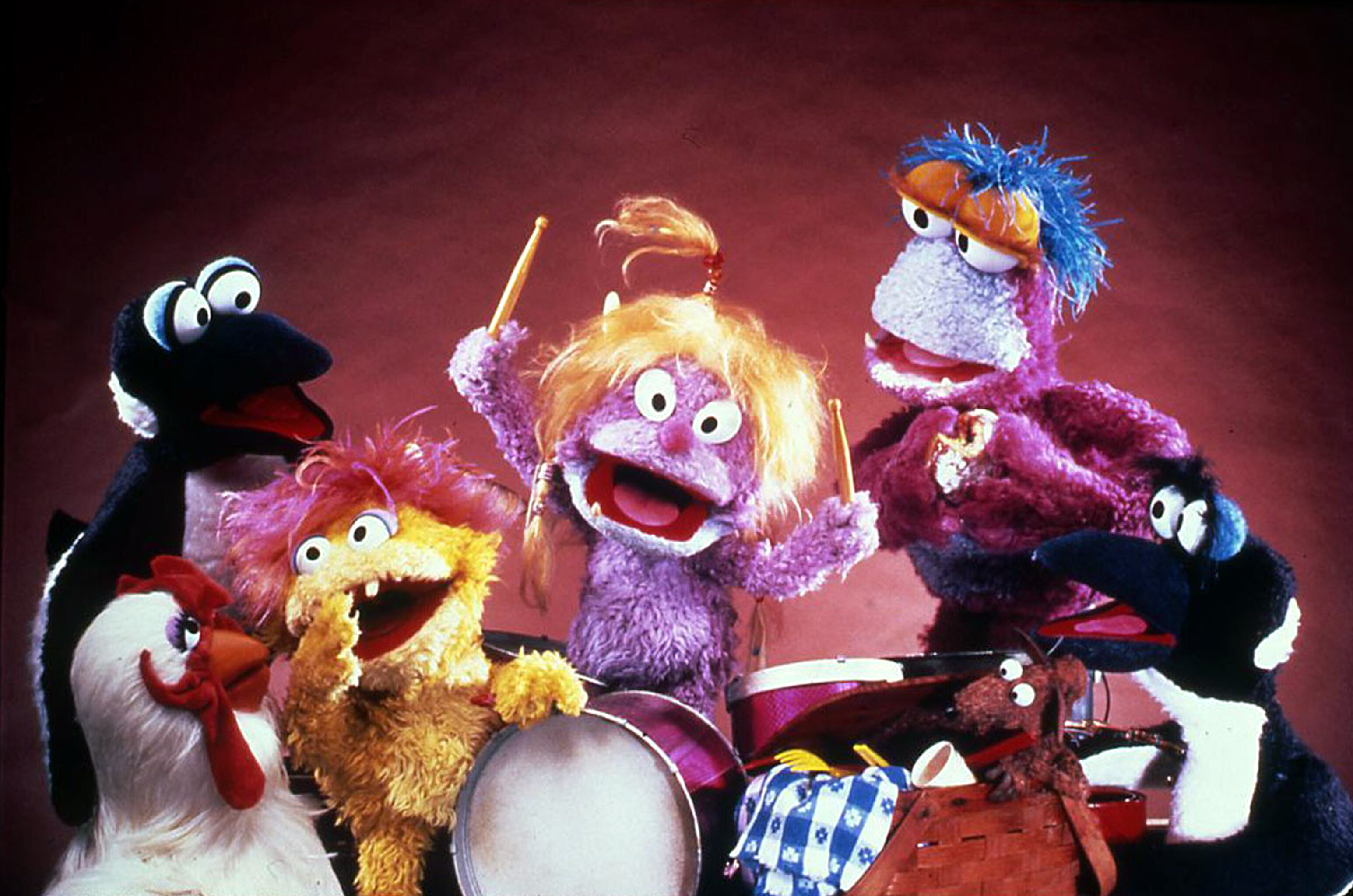
“The concept of this second half-hour was neither simple nor particularly well-developed,” according to storyboard director Scott Shaw. LMM focused on a trio of live-action (Muppet) monster kids named Tug, Boo and Molly. The 3 offered little in the way of characterization, as the series wasn’t around long enough for any of them to establish any solid identities. Tug and Boo were brothers and Molly was the token girl, but beyond that there wasn’t much to say about them. The show’s premise was that the trio had started their own TV station from the basement of the adult Muppets’ home (so wait, all of the Muppets live together in one house? Was this the same continuity as Muppets from Space?) which broadcasts only to the TV sets in the house upstairs, after an incident where Scooter has them put in the basement after Molly and Boo played water polo in the living room. (Again, huh? Since when is Scooter any kind of authority figure? It’s amazing how even Henson studio tends to forget that Scooter’s just a kid.) The kids were joined by Nicky Napoleon and his Emperor Penguins as their music act/house band.
The ‘shows’ broadcast on this quasi TV station were mostly recycled segments from The Muppet Show, only in animated form (CBS must’ve figured if kids will watch animated Muppet Babies, they’ll watch animated Muppet everything else), such as “Pigs in Space”, “Muppet Sport Shorts” featuring Animal for some reason (the dude’s a rocker, not a jock), “Fozzie’s Comedy Corner” in which a live-action Fozzie Bear tells variations on the “Why did the chicken cross the road?” joke as an animated stick-figure chicken does strange things on-screen, “Gonzo’s Freaky Facts and Oddball Achievements,” pretty much the same basic idea as “Comedy Corner” only with Gonzo acting as host instead of Fozzie and the emphasis being on weirdness rather than jokes. The final segment of each show was “Kermit the Frog: Private Eye”, allegedly film noir parodies starring Kermit as a Sam Spade-esque detective and Fozzie as his assistant, but they would usually drift away from this go off on some irrelevant tangent; the stories typically rambled and faltered and rarely came to any logical conclusion. As with the show as a whole, one really couldn’t say anything about the segments beyond, “OK, so that happened.”
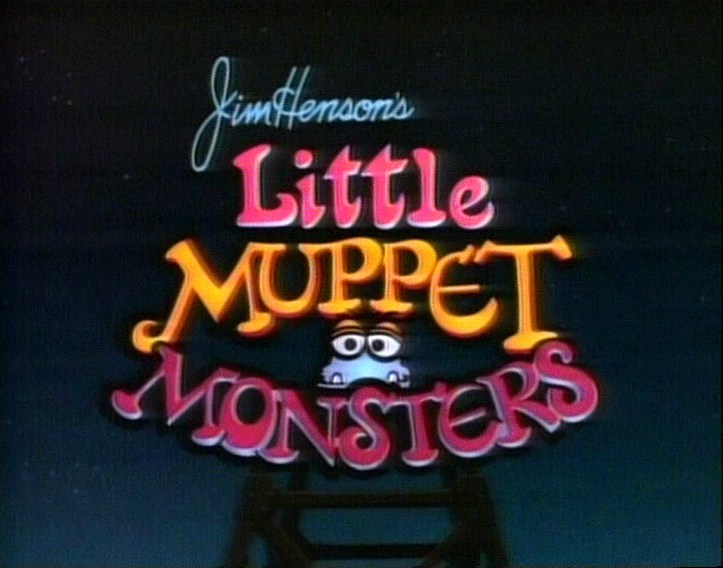
As per tradition, here’s the show’s opening:
Of the thirteen episodes that were produced, only three of them ever aired (and some of the remaining 10 epsiodes were incomplete at the time of cancellation). Ironically, it was Jim Henson himself who decided to pull the plug; Henson Associates and CBS agreed that the concept had never been properly thought out and just wasn’t up to Henson’s high standards. A quote from the man himself:
“I’ve always felt that the juxtapositioning of live-action and animated Muppets invited an unfavorable comparison, to which the cartoon version inevitably suffered; the puppetry was just too good. The combination of Muppet babies, adults and kid monsters was very disorienting. Also, due to a lack of development time, the concept — and therefore, the writing and designs — never quite jelled.” The now-vacant second half-hour was filled with repeats from Muppet Babies‘ 1st season. The ratings stayed strong, and everyone was happy. The only traces of LMM’s existence was the 6-note bridge from the LMM theme song, which remained part of Muppet Babies‘ closing title sequence throughout the remainder of the show’s run as well as syndication. Also, in another of TV’s great ironies, in 1990, segments of the animated “Pigs in Space” and “Kermit the Frog, Private Eye” from the second episode of Little Muppet Monsters titled “Space Cowboys” were re-shown in the final episode of Muppet Babies titled “Eight Flags Over the Nursery”.
Today, Little Muppet Monsters is no more. The series has yet to turn up on DVD, and given that most people have either forgotten about LMM or simply had no idea that it ever existed at all, it’s unlikely that it ever will. Some of the puppet models for the Monster characters have since been re-used for other purposes:
Boo Monster appears in The Jim Henson Hour episode “Science Fiction.” He is seen as an audience member of the “Miss Galaxy” pageant.
Boo Monster appears in The Cosby Show episode “Cliff’s Nightmare.”
Tug Monster made a background cameo in the opening of The Muppets at Walt Disney World.
The puppet for Tug Monster was later seen in Nick Jr.’s Muppet Time as Do Re Mi Monster and was later seen as different customers in Mopatop’s Shop.
Finally, in yet another great irony, all 3 central characters: Tug Monster, Molly Monster, and Boo Monster were seen briefly in the special The Muppets: A Celebration of 30 Years, which was broadcast on January 21, 1986. The special was shot before the suggestion was made to take Little Muppet Monsters off the air, so the show cheerfully celebrated the Muppets’ latest production and the newest additions to the Muppet family—even though that production had been canceled four months earlier.





 Twin Images
You must be logged in to post a comment.