
It was a good summer to be a gamer.
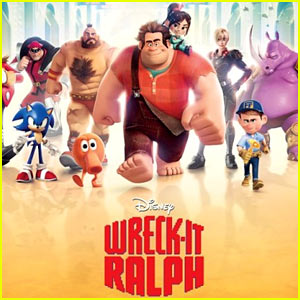
Disney’s Wreck-It-Ralph, the story of a big, burly but lovable video game villain (voiced by Walk Hard/Stepbrothers/Check It Out! with Dr. Steve Brule comedian/actor John C. Reilly) who just wants some respect and ends up getting so much more, earned an estimated $130,248,000 in North America, and $35,700,000 in other countries, for a worldwide total of $165,948,000. In North America, the film debuted with $13.5 million, an above-average opening day gross for an animated film released in November. During its opening weekend, the film topped the box office with $49 million, marking the largest debut for Walt Disney Animation Studios, ahead of Tangled‘s opening ($48.8 million).
I myself am an extremely casual gamer (I probably play an average of 1 or 2 games per year, though I watch a lot of game reviews and am a regular viewer of The Game Overthinker), but my general video game illiteracy didn’t prevent me from enjoying this movie. So far, I’d say that Wreck-It-Ralph is probably my 2nd favorite movie of 2012, topped only by The Avengers, and given how there are already Wreck-It-Ralph toys and tie-ins, Ralph himself cameos in the latest Sonic the Hedgehog racing game and costumed mascot versions of Ralph and Vanellope Von Shweetz (the ‘glitchy’ star of neighboring racing game Sugar Rush voiced by comedienne Sarah Silverman) have already been planted at Disney theme parks, it’s safe to assume that others enjoyed it as well.
I’m not going to review the movie itself, as I generally don’t do film reviews, since there are already dozens of people on the internet who do movie reviews and all of them do it 20 times better than I would, however I will list some of the ‘hidden’ bits, allusions, trivial facts and character cameos that were sprinkled throughout the film. Director Rich Moore determined that that for a film about a video game world to feel authentic, “it had to have real characters from real games in it”, thus Wreck-It-Ralph and his pixelated brethren inhabit their own world within the arcade, interconnected by a massive hub known as Game Central Station. GCS is brimming with a galaxy of characters and idioms from the gaming world, so there are a lot of things that you may have missed the first time. (I didn’t spot all of them right away, either).
First, the obvious facts about the fictional games within the movie:
- Ralph’s game, Fix-It-Felix Jr., is a homage of 8-bit classic arcade games such as Donkey Kong. The story of Fix-It-Felix Jr. not only establishes Ralph’s counterpart Felix as the resident “golden boy” hero of the game, but also helps the movie audience identify and sympathize with Ralph: the game’s into depicts Ralph as a giant-sized backwoods yokel who’s living peacefully in a stump on his own property, when a deluxe luxury apartment is constructed around him, forcing Ralph off his land and into the junkyard just to the right of the screen. Enraged, Ralph proceeds to climb to the top of building and demolish the place from the roof down with his bare hands (“I’m gonna wreck it!”). This brings in the hero of the game, Fix-It-Felix Jr. (voiced by 30 Rock‘s Jack MacBrayer), the building’s beloved superintendent, armed with a magic golden hammer that can repair anything with just a tap, to fix the damage that Ralph wreaks (I can fix it!”). In the game, Felix hops and jumps across the building’s ledges a la Mario (fun trivia fact: Mario’s original name was Jumpman).
- The first game Ralph ‘game jumps’ to, Hero’s Duty, is a grim, dark, edgy and violent First Person Shooter (FPS) in the mold of games such as Halo and Call of Duty, with some traces of Metroid. The main character of Hero’s Duty, Sgt. Calhoun (voiced by Glee‘s Jane Lynch) is not only reminiscent of Ripley from the Alien movies, but she may also be a sort-of homage to Metroid‘s Samus Aran, who likewise wears a high-tech suit of armor. (At the end of the original Metroid for the NES, if the player defeated the entire game on difficult, then Samus’ armor would disappear, revealing Samus to be a woman.)
- The second game Ralph jumps to (and where he meets Vanellope), Sugar Rush, is a mix of the popular children’s board game Candy Land and the Super Mario Kart racing game series.
Now, some of the more obscure stuff:
- The song “Wreck It, Wreck-It-Ralph”, performed over the movie’s closing credits, was composed by the duo of Buckner & Garcia, the same pair who wrote “Pac-Man Fever” back in the 1980’s.
- The theme song for Sugar Rush, also heard over the closing credits, was performed by an actual J-Pop band, AKB48.
- Speaking of music, real life dubstep musician Skrillex makes a non-speaking cameo in the movie; he’s the DJ at Felix’s 30th anniversary party.
- At the movie’s opening, in Litwak’s Arcade, one of the game cabinets seen is the original Teenage Mutant Ninja Turtles arcade game.
- After Litwak’s closes, the character who announces that all is clear is Yuni Verse from Dance Dance Revolution.
- The bar that Ralph visits after the party scene is Tapper’s Tavern. Tapper is an old arcade title from the early-to-mid 80’s, in which the player controls a bartender whose goal is to slide mugs of beer over to his patrons.
- The chef seen in the kitchen of Tapper’s Tavern is Peter Pepper, the main character of the 80’s video game Burger Time.
- One of the items that Ralph finds while digging through the lost-and-found box at Tapper’s is the exclamation point (!) that appears over the head of Solid Snake in the Metal Gear Solid games, complete with the accompanying sound effect. He also comes across a red mushroom from Super Mario Brothers.
- Game Central Station is riddled with graffiti reading “Aerith Lives”, a reference to the character of Aerith Gainsborough from Final Fantasy VII, who is killed within the story of the game and spawned the internet meme “Aerith Dies”.
- Other graffiti scribblings include “All your base are belong to us,” (an engrish phrase popularized from the game Zero Wing), “Sheng Long Was Here,” (referencing an April Fool’s joke around the made-up character Sheng Long from Street Fighter), and “Jenkins” (a nod to the popular Leeroy Jenkins meme from World of Warcraft).
- There is a rumor that Mario and Luigi were originally supposed to appear in the movie, but didn’t because Nintendo wanted too high a fee for their usage, but the actual reason was that the producers couldn’t think of a reasonable way to incorporate Mario into the movie without it looking like he was shoehorned in. Mario does get a causal mention in the movie: when Ralph knocks on the door of Felix’s apartment during his party, Felix says “Must be Mario. Fashionably late as usual.”
- Pac-Man is seen as a guest at Fix-It-Felix’s party. The 4 ghosts, Blinky (red), Pinky (pink), Inky (blue) and Clyde (orange) can be seen turning a corner in Game Central Station.
- Dr. Wily from the MegaMan (Rockman) games was originally set to appear in the move, but didn’t.
- 7 characters from Street Fighter II appear in the film: Ryu, Ken, Chun-Li (both in person and as a drawn caricature on the walls of Tapper’s Tavern), Cammy, Zangief, M. Bison and Blanka (during the closing credits).
- The guard in front of the restricted bonus level of Sugar Rush is Beard Papa, the mascot of an international chain of cream puff stores started in Japan by the company Mugino Co., Ltd.. Their slogan is “Fresh’n natural cream puffs”. Beard Papa’s has over 250 stores in Japan and 300 worldwide.
- King Candy’s palace guards are a pair of doughnut cops named Winchell and Duncan. Aside from being a walking joke on the stereotype of cops loving doughnuts, they’re both named after popular doughnut franchises: Winchell’s Doughnut House and Dunkin’ Dounts, respectively.
- Turbo Time, a fictional game within the story, is based on arcade racing titles such as Pole Position. The actions of that game’s main character spawned the in-universe expression “Going Turbo”, which refers to when a game character decides to abandon their respective game.
- When a game is broken, it’s arcade cabinet is taken away, and the game’s inhabitants are rendered homeless. Characters from Q*Bert: the title character, Q*bert, Coily, Slick, Sam and Ugg are shown as homeless characters who are later taken in by Ralph and Felix into their game.
- Also present at Game Central Station: the title character from Paperboy, a Puka, a Fygar and the title character from Dig Dug and the 2 paddles from Pong and the Qix from Qix.
- Many of the established game characters are voiced by their current voice actors: Roger Craig Smith as Sonic the Hedgehog, Kyle Hebert as Ryu, Reuben Langdon as Ken Masters and Gerald C. Rivers as M. Bison (or Vega or Dictator, depending on which side of the pond you live on). Zangief is voiced by the film’s director Rich Moore, who also voiced King Candy’s henchman, Sour Bill.
- When King Candy hacks the code to Sugar Rush, the door to the code is locked with a NES control pad. King Candy unlocks it by pushing the buttons Up, Down, Up, Down, Left, Right, Left, Right, A,B,A,B, Start. This is the infamous Konami cheat code used in many Konami games, including Gradius and Contra for the NES (Nintendo Entertainment System), and it was also the fake code posted by Electronic Gaming Monthly which claimed to allow players to play as Simon Belmont (the hero of Castlevania) in the NES version of Ninja Turtles 2: The Arcade Game, and one of EGM’s first and most notorious April Fool’s jokes.
- When the rocket that Ralph falls into careens through Game Central Station, it knocks Sonic onto the floor, causing all of his rings to fly out like in his respective game.
And finally, we come to the scene in which Ralph attends Bad-Anon, a support group for video game villains, one of the first scenes in the movie leaked to the public and arguably one of the most popular scenes in the movie.

There are numerous game baddies in attendance here, some you’ll instantly recognize and others you won’t:
Some are obvious: Bowser (aka King Koopa) from Super Mario Bros., Zangief and M. Bison (Vega/Dictator) from Street Fighter 2, Dr. Eggman (or Robotnik) from Sonic the Hedgehog, and Bad-Anon’s leader and mediator, Clyde, the orange colored ghost from Pac-Man. (Interesting that the producers would choose him for this role when in most of Pac-Man’s publicity, Clyde is often portrayed as the least intelligent of the ghosts.
Less obvious characters:
- The yellow robot with the buzzsaw hand is one of the enemies from the Sega Genesis’ Cyborg Justice.
- The thuggish looking cyborg with the arm tattoos and infrared eye implant is based on Kano from Midway’s Mortal Kombat, though he’s not officially named as such.
- The zombie is based on Cyril from House of the Dead.
- The purple rhino creature is Neff from Sega’s Altered Beast.

The other 4 characters: Satan, er, um…Satine (the red devil), the ninja, the floating green blob monster with the crown and this sexy elf-eared blue lady, are apparently not from any actual games, but rather were simply added to fill out the numbers. Jason (Goldstar) suggested that if the filmmakers wanted a female video game villain, they could have used the Dark Queen from Battletoads, which would’ve been a good idea, but since I like looking at the blue chick, I’m not going to file a complaint. I’ve unofficially named her Lady Cassandra from a game called Monsters, Magic & Mayhem, but you don’t have to.
Too much free time? You bet!

 Twin Images
You must be logged in to post a comment.