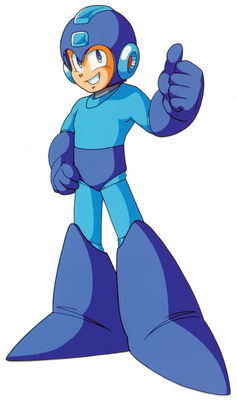
Today’s Player Two Start looks at Marvel VS Capcom.
For those who don’t know, Marvel VS Capcom: Clash of Super Heroes is a crossover fighting game developed and published by Capcom. It is the third installment in the Marvel vs. Capcom series, which features characters from Capcom’s video game franchises and comic book series published by Marvel Comics. The game debuted in Japanese arcades in January 1998. It was ported to the Dreamcast and PlayStation, which were released from 1999 through 2000. The game was re-released in 2012 for the PlayStation 3 and Xbox 360 as part of the Marvel vs. Capcom Origins collection.
Players select a team of characters from the Marvel and Capcom universes to engage in combat and attempt to knock out their opponents. In contrast to the series’ previous entry, Marvel Super Heroes vs. Street Fighter, the game features characters from numerous Capcom video game franchises, rather than strictly Street Fighter characters. While the gameplay is largely identical to its predecessor, Clash of Super Heroes features two distinct changes: the removal of the traditional character assist system and the introduction of the “Variable Cross” attack.
The selectable Capcom characters were Ryu (with the ability to switch to ‘Ken Mode’ and ‘Akuma Mode’ to make up for those characters not being chosen for the game…)

…Chun-Li, Captain Commando, Strider Hiryu, Rockman/Mega Man (freakin’ MEGA MAN! This was back when Marvel still gave a crap about Rockman), Jin Saotome, Morrigan and Zangief, while on the Marvel side we had Captain America, Spider-Man, Hulk, Wolverine, Gambit, Venom and War Machine. There were also a bevvy of Strikers who could be chosen to run across the screen lending a hand temporarily, including Thor, Juggernaut, Jubilee, Psylocke, Arthur (from Ghouls ‘n’ Ghosts), Michelle Heart (from Legendary Wings), Devilot & Dr. Stein, Pure & Fur and others, making for a total of 52 characters in all. The final boss of the game was Onslaught, who was the combined negative energy of Prof. and Magneto or a manifestation of their combined ids or the result of a bad plate of ribs they ate or something; it tied into some multi-issue event Marvel was doing at the time, comics are weird.
Intro time:
Now that we’ve gone sufficiently crazy, the Versus games sported too many characters for each one to have their own specific stage, so they typically just had a finite set of interesting ones. MvC in particular had 9 stages in all (10 counting the Final Boss stage), each of them unique in their own way. Today Videots takes a look at each of them. NOTE: These won’t be in any particular order, so I won’t be numbering them.
NEO ST. PETERSBURG
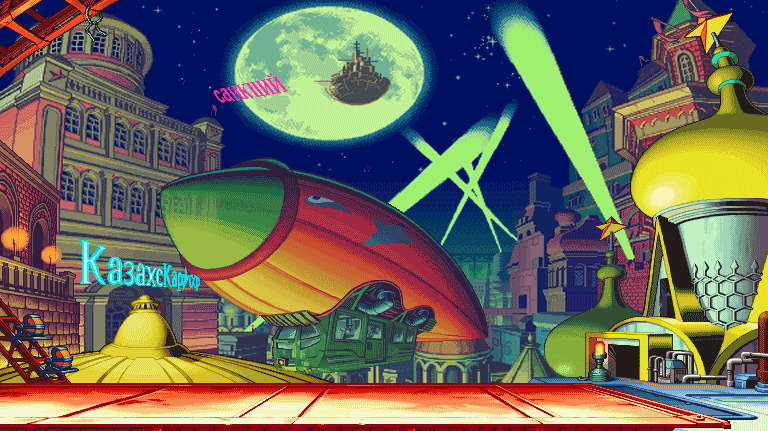
This is Strider Hiryu’s home stage, taking place in the first stage from his first game, St. Petersburg.
The stage is set in the red platforms from the initial area, overlooking the capital city and their various mosque buildings while several searchlights waves around in the background, much like in the original game. Original for this game is the inclusion of a zeppelin floating up in the center of the stage, bearing the Kazakh Federation’s half-star symbol, which is also present in three buildings.
Two laser signs can be seen at times in the sky: the first writes “Казахскар CCP” a misspelling of “Казахская CCP” (Russian for “Kazakh SSR”), while the second writes intermittently “A.D. 2048” and “Санкций” (Russian for “sanctions”). The first two are direct references to the intro scroll that opens up the Arcade’s first stage, while the third word is original for this game. The Third Moon can also be spotted high up in the sky, in front of the real moon.

LIVE HOUSE OF THE DARK REALM
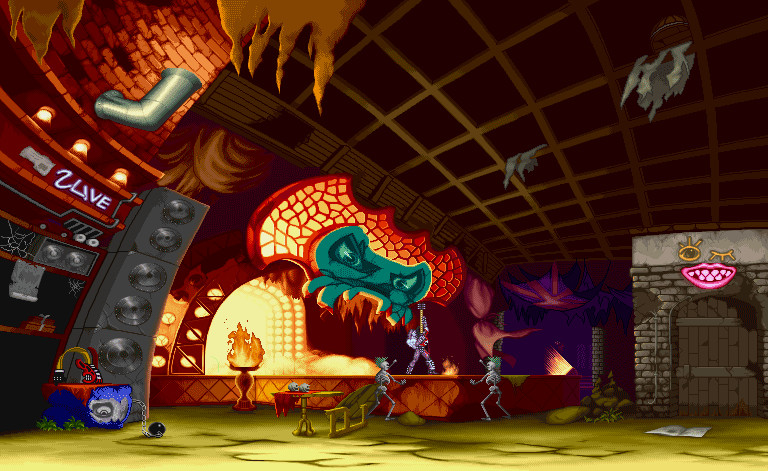
The stage takes place inside a worn-out live house, with the zombie Lord Raptor (aka Zabel Zarock) playing guitar on the stage while two punk skeletons are headbanging to his music and two skulls in the table are opening and closing their mouths while watching. (Also I just now noticed that freaky neon face above the door. Eeeehhh…) In the last round, ghosts approach the defeated fighter. This is considered Morrigan’s home stage. Morrigan’s and Gambit’s endings take place in this stage. (I know Gambit’s been known to hang out in some seedy dives, but I’ve never figured he’d be the type to rock out with spooks. Well, he is from Voodoo country, after all.)
ROOFTOP OF THE DAILY BUGLE
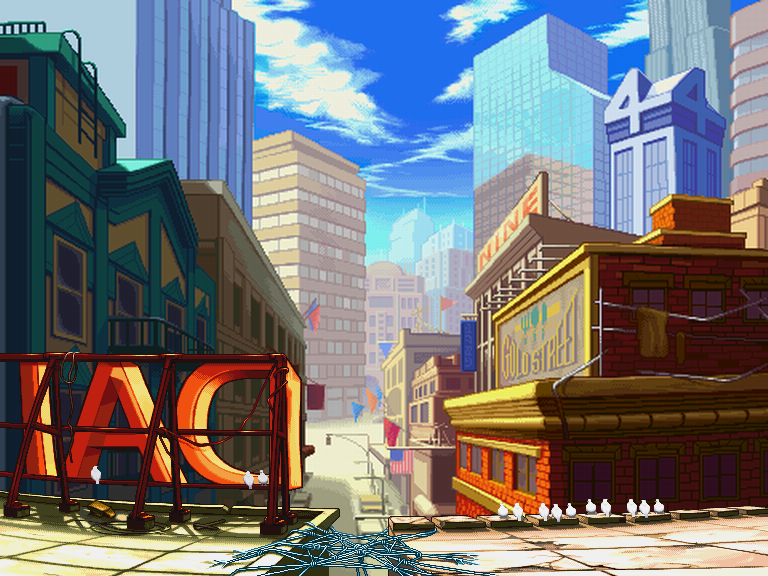
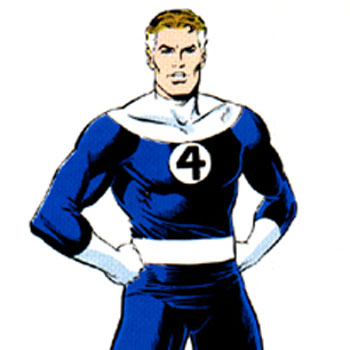
This stage takes place in New York City, between the rooftops of the Daily Bugle (with the first three letters from its name visible) and a neighbor building, webs connecting the two to avoid the fighters from falling. The background has several buildings, the most notable being the Baxter Building. This is considered the home stage of Spider-Man and Venom. My favorite part of this stage is the Baxter Building/Four Freedoms Plaza, the HQ of the Fantastic Four, in the background.
AVENGERS HEADQUARTERS
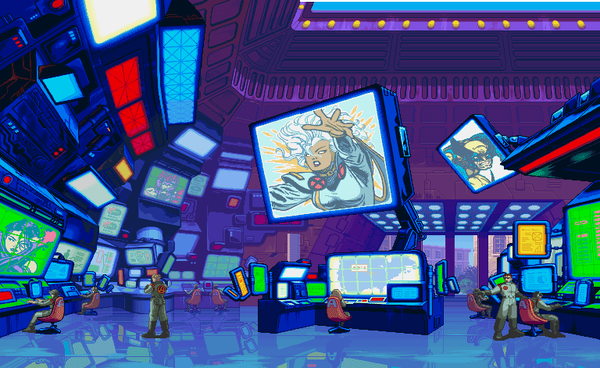
This stage takes place inside the Avengers Mansion, with the Avengers Support Crew monitoring several screens. Psylocke, Magneto, Storm and Wolverine appear in some of the screens. (All X-Men, as it happens.)
In Captain Commando’s ending, an Avengers Crew contacts the Avengers to tell them that Onslaught was defeated. Captain Commando appears in the screen and says that he and his team took care of him. Similar to the ending from his game, the Avengers Crew asks who he is, and he says “I am Captain Commando”.
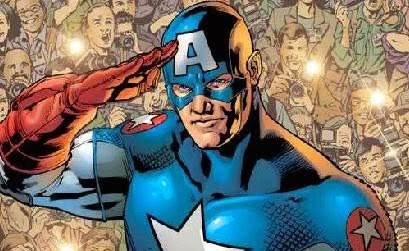
In Captain America’s ending, he is in the HQ with the Capcom characters and explains that Onslaught was the embodiment of the dark emotions of Professor X and Magneto, and his conscience summoned heroes to stop him. With Onslaught’s demise, the Capcom heroes return to their world and Captain America salutes them.
DR. WILY’S MILITARY BASE
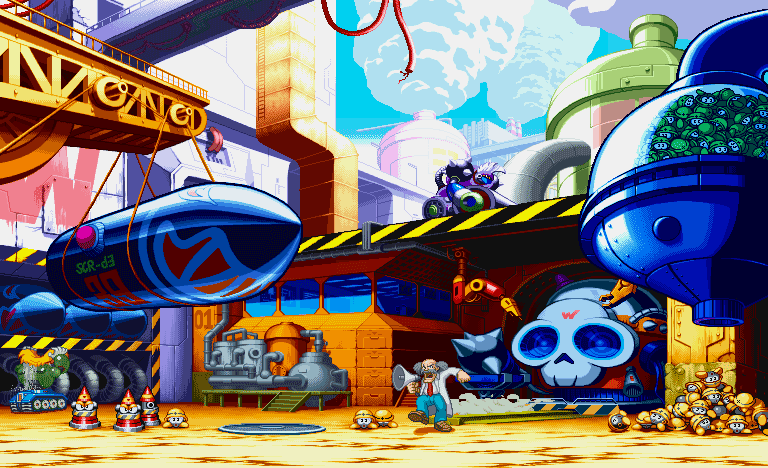
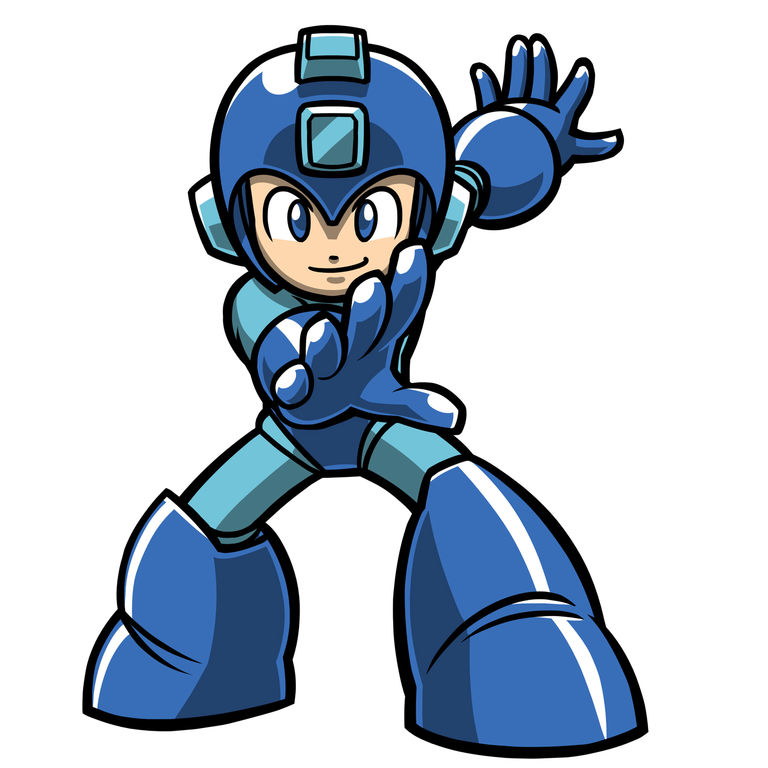
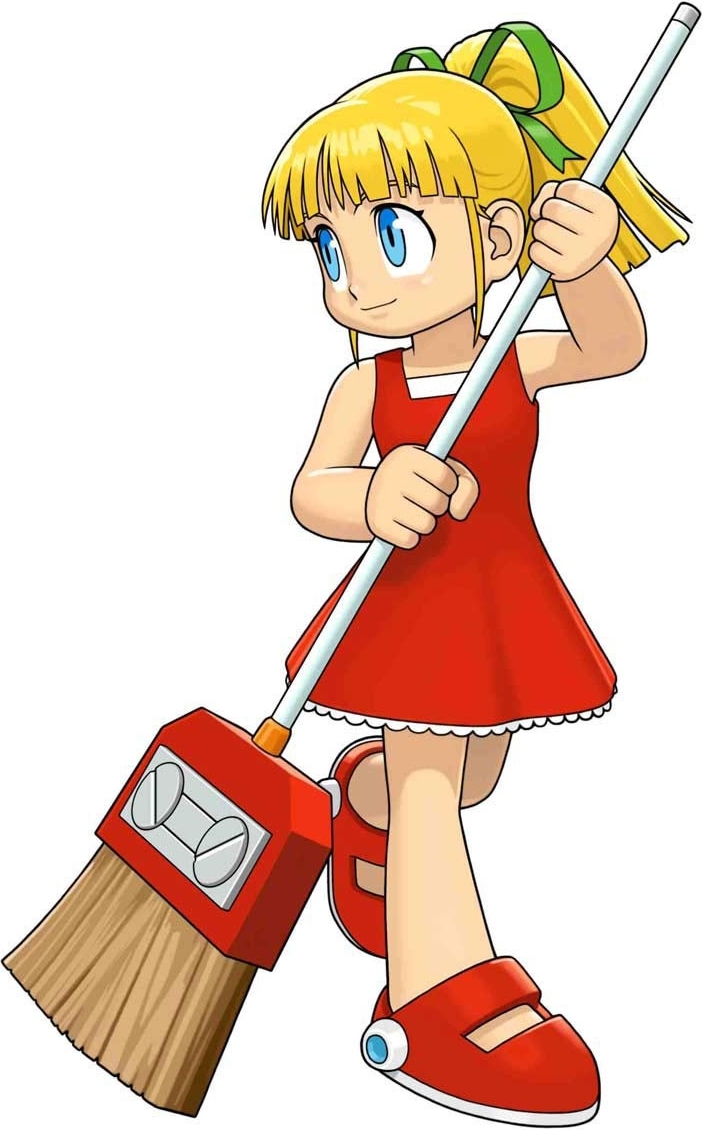
This stage takes place inside one of Dr. Wily’s many secret bases, with the mad, mad, mad scientist walking around and angrily yelling to the fighters with a megaphone. In the background there is a Metall Potton with several Mettaurs, giant Killer Bullets, Baccones, Mad Grinder, and Dark Man 1 moving back and forth carrying a damaged sack. This is considered the home stage of Mega Man and Roll. Speaking of Megs, one little touch I always liked is when Mega Man delivers the final blow, you’ll hear the signature “You Got a New Weapon” tune from his games instead of the usual Victory music.
BLUE AREA OF THE MOON
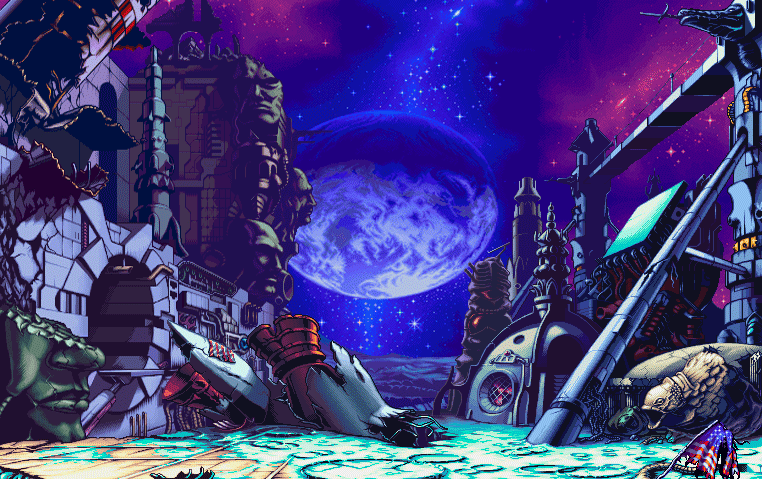
This stage takes place in the Blue Area of the Moon, an artificial, Earth-like environment in the Moon containing the ruins of the Inhuman city of Attilan and the citadel of Uatu the Watcher. The background contains some alien ruins and an old American flag. The blue planet Earth is visible far away. Ryu’s ending takes place in this stage, where he starts training Sean.
HEADQUARTERS OF EVIL
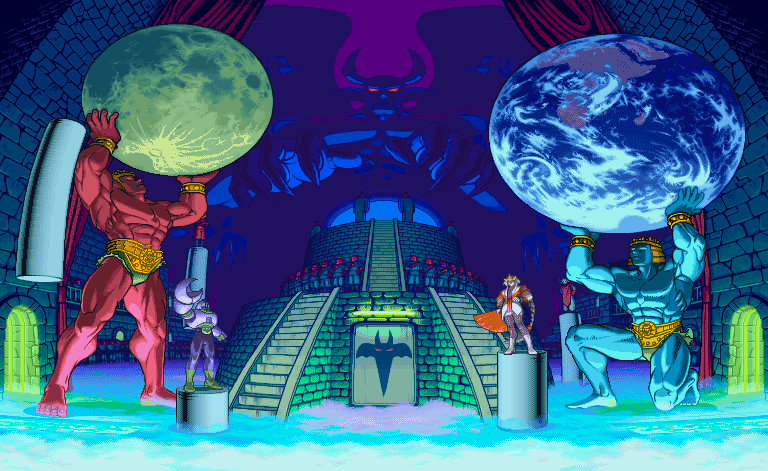
This stage takes place in the headquarters of an unknown evil group. In the background, the Forgotten Worlds bosses Whodin and Laidin are holding an Earth and a Moon, and in the top center in a gigantic version of the evil god Bios.
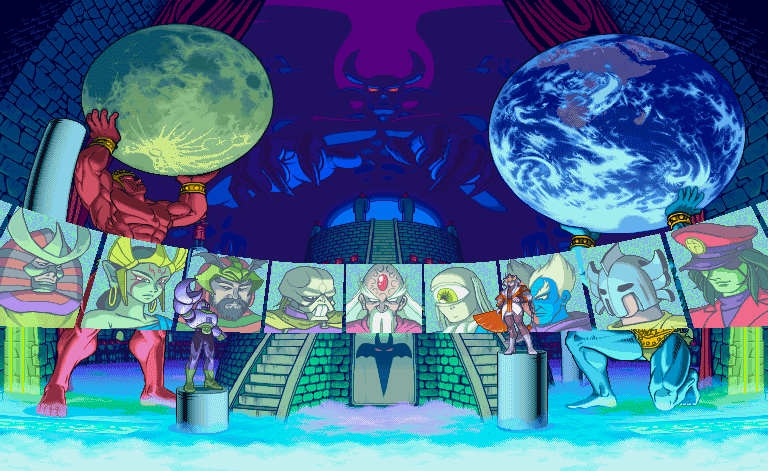
The stage also has many other unknown characters that were apparently created for this game.
Chun-Li’s ending takes place in this stage, where she tries to face M. Bison but is defeated by him, and he plans to make her a member of Shadaloo (This stage presumably having links with the organization). Fortunately, Shadow appears and saves her.
THE CLIFF OF DESOLATION
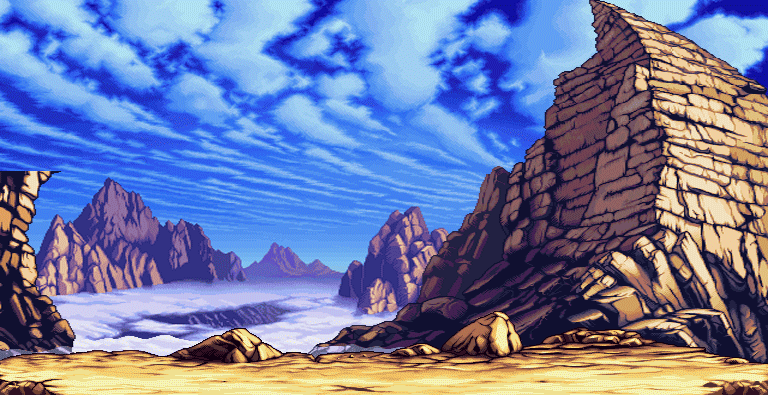
This stage takes place in a cliff at an unknown location. As the rounds pass, the stage changes from day to sunset and to night with lightning.
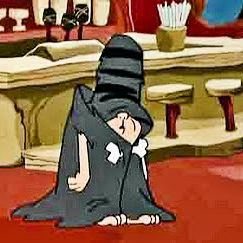
HONDA’S BATHHOUSE
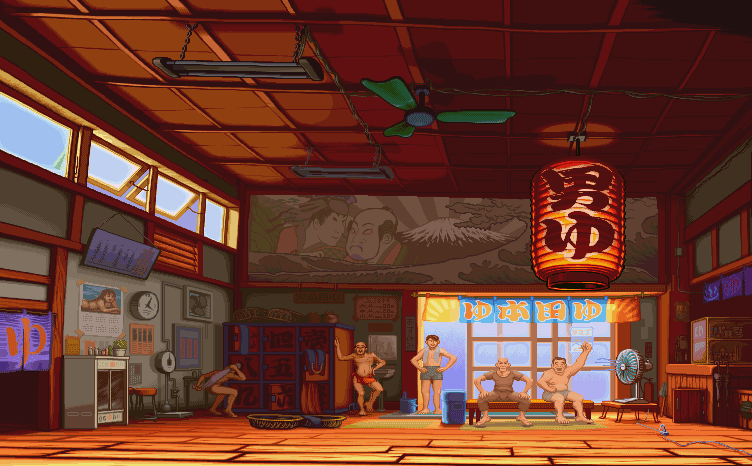
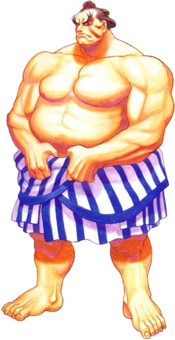
This stage takes place in E. Honda’s bathhouse in Japan, his stage from Street Fighter II. This stage has 2 parts: the guy’s bathhouse, which you see here, and if you scroll to the right and manage to break the wall…
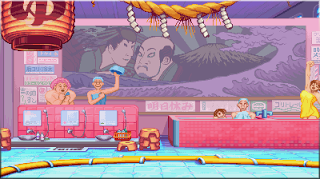
…You get to see inside the ladies’ bathhouse. Rowr-rowr!
*Give yourself bonus geek stars if you noticed Norimaro (from Marvel Super Heroes VS Street Fighter) and Sakura in the ladies’ bath.
So there you have it. My little tribute to Marvel VS Capcom‘s stages.