
The recent Titanic like sinking of The Hub called to my mind another kids’ network which like The Hub had potential but never quite lived up to it…Fox Family.

In 1997, Rupert Murdoch’s News Corporation entered into discussions to purchase a stake in the Pat Robertson owned Family Channel with International Family Entertainment as a partner, in order to use the channel to carry the library of children’s programs that News Corporation had owned through television production company Saban Entertainment.
The Family Channel was sold to Fox Kids Worldwide Inc., a joint venture of News Corporation and Saban, in July 1997; that subsidiary was renamed Fox Family Worldwide Inc. as a result of the acquisition. The Family Channel was renamed as Fox Family Channel (though on-air promos typically referred to the channel as just “Fox Family”) on August 15, 1998 at 12 p.m. Eastern Time.
When Fox bought the channel, programmers sought to reposition it to target a dual audience – kids in daytime, families at night. Once the network became Fox Family, the new owners dropped nearly all of the Family Channel’s programming lineup – which at that point included reruns such as Bonanza, The Carol Burnett Show, Hawaii Five-O, Rescue 911, and Diagnosis: Murder – and replaced them with shows that appealed to a more younger demographic. “Our focus is on younger families, more suburban or urban, more plugged into pop culture,” said network president/CEO Rich Cronin. Fox Family was obligated to continue airing The 700 Club as part of the sale, but airings were scaled back to two times each day (though the sale agreement required the channel to air it three times daily, once each in the morning, late evening and overnight hours), with the evening broadcast being moved out of primetime, and pushed one hour later to 11 p.m. Eastern from 10 p.m. Weekly airings of Columbo were also moved from 9 p.m. Eastern to 10 p.m. on Sundays. More cartoons were added to the lineup, many of which were from the Fox Kids program library. The network was running about eight hours of cartoons a day.
Fox Family also became a cornerstone for syndicating foreign television series, such as the popular British S Club 7 television series, which became the flagship series for the channel until the new millennium. The channel also syndicated many Canadian television series (primarily those produced in English-speaking countries), both animated and live action, including Angela Anaconda, Big Wolf on Campus, I Was a Sixth Grade Alien, Edgemont, Mega Babies, and briefly, The Zack Files. The channel even showed cartoons and anime based on video games, such as Donkey Kong Country, Megaman and Monster Rancher. Most of these shows were a part of the channel’s morning lineup, which also included the original series Great Pretenders. Fox Family also aired reruns of some Fox Kids series such as Bobby’s World, Eek! The Cat, and Life with Louie. The channel added some recent family sitcoms as well, along with European shorts like Tom And Vicky, The Three Friends…and Jerry, Gogs, Lava-Lava!, Animal Shelf and 64 Zoo Lane. Fox Family was also the first channel to air reruns of Pee-Wee’s Playhouse since CBS canceled the series after Paul Ruebens was caught doing what you’d expect to see someone doing in an adult theater. (Really, what were they thinking he’d be doing in there? Playing Pictionary?)
Fox also created a film division for the channel, Fox Family Films, which produced films aimed towards different age groups, mainly children, including Addams Family Reunion, which was shown in its inauguration of the channel, and Digimon: The Movie, which was compiled from several Japanese Digimon short films. For a more teenage audience, Fox Family Films created Ice Angel, a made-for-cable movie about a hockey player reborn as a female synchronized skater, as well as the thriller Don’t Look Behind You. Fox Family also aired a wide array of Saban Entertainment-produced movies as well as airing many direct-to-video 20th Century Fox films, including Richie Rich’s Christmas Wish, Casper: A Spirited Beginning and Like Father, Like Santa.
With all that going for it, one would’ve expected this channel to sail to the heights, but unfortunately Fox Family wasn’t the shot in the arm to cable what Fox Kids was to weekday and SatAM programming back in the 90’s. I personally feel the reason for FF’s lackluster performance was simply due to a slew of mediocre programming. To be fair, aside from Mega Babies and I Was a Sixth Grade Alien! (the former was a gross-out cartoon guaranteed to make anyone and everyone watching it lose their collective lunch, while the latter was a cheaply made sci-fi comedy starring some poor kid in purple makeup and a garbage bag costume with a glow stick hot-glued to his head, piss-poor acting which made your local dinner theater troupe look like Shakespearean thespians and a season’s budget that was likely blown on a Happy Meal), none of Fox Family’s shows were horribly bad; the problem was that none of them were horribly good either.
- I wanted to like Angela Anaconda, since it was co-created by Pepper Ann creator Sue Rose and I’m a big PA fan, but that ‘photographed heads on cartoon bodies’ filming technique was so creepy and off-putting that I couldn’t stand to look at it for more than a minute or so.
- The Kids from Room 402 offered a few chuckles, but no belly laughs, plus I got the point of this show after a few episodes, by season 2 the story ideas and jokes really began to run dry and the characters just got more irritating and less amusing. Also, in season 2, the writers began portraying the students, who were supposed to be around 8-10 years of age, as teenagers when a hackneyed plot called for it, a writing practice I’ve never been a fan of.
- The Donkey Kong Country series, which debuted in 2000, was also something I really wanted to like, but CGI was still in it’s early stages during this time, so the show suffered due to a severely limited budget (King K. Rool only had 2 minions since that was as many as the producers could afford to animate, for example). The show also may have fared better if it contained stuff that was, you know, actually in the games that inspired it. What was all that business about the Kongs working in a factory and a Crystal Coconut? The stories and cinemas of the games were far more entertaining. Maybe someday Nintendo will try to launch a DKC show again, with CGI and money being different beasts now, I think such a show would fare better the second time around.
- Weird-Ohs, a Mainframe produced series based on a cultish line of toys, came and went so quickly that I can’t find anyone else who’s ever seen it, I remember it being one of those shows that I could sit through as an alternative to nothing, but immediately forgot about the second it was over.
- I liked the idea behind FF’s weekday afternoon block The Basement, unfortunately none of the shows on it were that great or memorable: The best thing on The Basement was Eek! The Cat, and while I kind of dug it, even Eek!‘s staunchest fans would have to admit that the show is an acquired taste, Saban’s Monster Farm was another show which provided some light laughs here and there, but it was nothing worth rushing home to see, Walter Melon was the Sha Na Na of cartoons: a One-Trick Pony novelty act about a toon whose job is substituting for other famous fictional characters, since Walter had no setting or supporting cast of his own, he only appeared in spoofs of other shows, the novelty of Walter Melon wore off quickly. Bad Dog, another Canadian import, was basically one joke repeated over and over. If you’ve seen one episode of this show, you’ve seen them all; not only was it the same basic plot each time, but many of the exact same gags were re-used. The Three Friends…and Jerry was more or less a British Ed, Edd ‘n’ Eddy minus the bizarre quirks and endearing character traits and a slightly more perverse edge; once one got past the basic shtick that nothing ever worked out for the title characters and everyone else hated them, there really wasn’t much else to say about it. The added attractions imposed upon it by Fox were similarly hit or miss. The biggest misfire was the leftovers of Fox’s Stickin’ Around, co-created by Robin Steele and Brianne Leary, a show which was “meh” at best; it didn’t help matters that Fox chose to edit these shorts with a Cuisinart; the Stickin’ Around shorts were so mercilessly hacked to bits that following the plots was next to impossible.
- I was exactly the wrong age demo for the likes of S Club 7, Edgemont and The Zack Files, so I never caught those. Similarly, I never saw a full episode of Big Wolf on Campus (it came on before some shows I watched, so I saw the ends of a lot of shows), but I understand it garnered a somewhat substantial cult following among certain fans.
- I never saw an episode of The New Addams Family; my father watched a couple of episodes, and regarding his opinion on them, it was first time in my life I ever heard him use the word “suck”.
- I have no memory of Outrageous!, ’cause I never saw it; come to think of it, I don’t think I ever watched Fox Family at night aside from some of the specials and movies which would air during The 13 Nights of Halloween and The 25 Days of Christmas, which are the only remnants of the channel to this day.
As Jason (Goldstar) mentioned, another thing which contributed to the demise of Fox Family was internal struggles between the companies which owned and ran it (still more shades of The Hub). There were frequent clashes between News Corporation and Haim Saban. On July 23, 2001, it was announced that Fox Family Worldwide Inc. would be sold to The Walt Disney Company for $2.9 billion. The sale to Disney included ownership of Saban Entertainment. Given that the Disney acquisition took the channel into a deeper decline in its early years and how ABC Family is now the home of trashy reality shows about gratuitous underage drinking and teenage pregnancy, this will go down in the books as EPIC FAIL.
So Hasbro can take some solace in the knowledge that they weren’t the first company to try and join the ranks of the Big 3 kid vid networks and miss the mark. However, even though The Hub failed spectacularly in its’ efforts, I still have to give it a slight nod over Fox Family since they put forth an effort to showcase girl centric cartoons not aimed at preschoolers. Well, actually, Fox Family did have one such show…

…but sadly there’s no longer a Fox Family or a Hub for this show to go to now. Hey, Netflix. As long as you’re reviving old properties, maybe you could give this one a shot. It couldn’t be worse than Angela Anaconda or SheZow!.


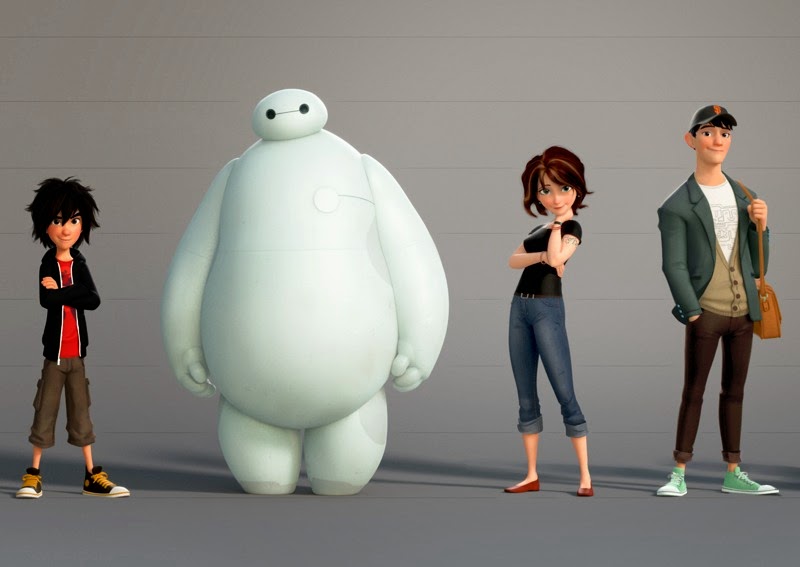

 So there you have it; some little food for thought for when you go see Big Hero 6 (if you’re planning to see it, that is; I am). Will Big Hero 6 be Disney’s next big thing or just a homogenized sawed-off Avengers wannabe for kids? You decide.
 Twin Images
You must be logged in to post a comment.