
Today’s 2 Funny comes to us from Garrett Snook (aka Il Niege, host of Geekvision’s “What We Had to Watch”). The Mortal Kombat ninjas take a break from severing spines and head over to the recording studio. Enjoy “Test Your Might”.
Tag video games
Player Two Start!: Norimaro – The Man, The Myth, The Legend
Today, we’re going to spend some time talking about….this guy.

For those who don’t know, it’s Norimaro from Capcom’s Marvel Super Heroes Vs Street Fighter. Norimaro is an original character created and owned by Japanese comedian Noritake Kinashi (one half of the comedy duo known as “The Tunnels”) who represents neither Marvel nor Capcom. He appears as a regular character only in the Japanese arcade and console versions of the game, but was removed in all the overseas versions. He portrays a nerdy, cowardly schoolboy-type guy armed with a camera, who throws common school items like mini-Gouki (mini-Akuma) dolls and plushies as projectiles, and would attempt to ask for his opponent’s autograph mid-battle (can be seen when the player presses the START button during a match). Occasionally if this is done while facing the computer controlled Dan, his taunt will be done where he signs an autograph and throws it at Norimaro. He uses the comical “Hyper Strong Miracle Treasure” Hyper Combo, which has him throwing a massive amount of school supplies and other objects, and the equally-comical “Ultra Variety Private Memories” Hyper Combo, where he rushes his opponent and inflicts a multi-hit combo while wearing costumes. He is playable on the US version via hacking or if a cheat code is done with an emulator, and even has English dialogue in the Apocalypse and ending scenes, as well as win quotes, which indicates that he was intended for the overseas versions as well in the development stages of the game. Likewise, while he has been removed from most of the game’s overseas promotional materials, some overseas gameart still contains him, such as the game cover art above.
Here’s a taste of Norimaro in action:
Norimaro’s special movies include:
- Tourist’s Treasure: Norimaro panics and turns around, which swings his bag and causes a doll or a school item to fly out, which acts as a projectile. The many items tend to vary, from a protractor to an Akuma figurine.
- Personal Victory Jump: Norimaro leaps into the air diagonally body first, yelling “Shouryuuken” in what he probably thinks is a deep, serious voice. Works as an anti-air, has some recovery time, but sadly is the weakest anti-air in the game.
- Fierce Hand Current: Norimaro cries while flailing his arms about while moving forward a distance, then falls over. Is a good move and sends the opponent flying if connects and does multiple hits, but has a lot of recovery time.
- Banana Slip: Norimaro slips with a banana peel, launching the opponent in the air. This is Norimaro’s hard kick and technically isn’t a special move, but it has a special feature: if the banana hits the opponent, he will slip as well, and the peel can hit OTG.
Hyper Combos:
- Hyper Strong Miracle Treasure (Level 1): Norimaro panics and throws thousands of school supplies and toys out of his bag.
- Ultimate Grand Champion Jump (Level 1): Norimaro charges and then does a body-first diagonal high jump that hits multiple times.
- Ultra Variety Private Memories (Level 1): Auto-combo/ranbu super. Norimaro dashes forward, and if this hits, he rapidly switches between a variety of silly poses which recount his memories, such as taking a bath, hiding behind his father, drawing on the floor, flipping an egg, dressing up as Rockman, playing with a teddy bear, being bit in the leg by a dog, playing in a cardboard car, and singing karaoke.
Unbenkownst to us Yanks, there were some additional Norimaro animations which didn’t make it to the final cut, such as the one below, in which Mr. N spots something interesting and jumps to the ground. This animation would have been used for victories against the game’s female characters, Chun-Li and Sakura; instead of his usual win animation of heading over to the fallen form of his opponent and snapping a photo of himself, Norimaro would take this opportunity to sneak a peek under his defeated opponent’s skirt. You dirty dog, you!

“Ooh, what do we have here??”
There is also what appears to be a unused Hyper Combo depicting our guy fantasizing about a particular Capcom character, triggering an explosive nosebleed. Several variants of this animation exist, specifically for Chun-Li, Sakura, Cammy, Morrigan and Felicia, as well as Anita (a little girl) and Zangief (a man). Clearly, this silly otaku’s fandom isn’t limited to just the ladies!


BOM-CHICKA-WOW-WOW!
One final point of confusion (for us Americans, anyway) is Norimaro’s game ending. Bizarrely, beating the game shows Norimaro’s ending images with Dan’s ending dialogue and Captain America’s nametag. Norimaro’s ending is basically him conquering the world, dying, and becoming a tedious subject for history books. Living proof that nerds rule.


“Oh, I’ve got to get me one of those!”

“Norimaro = HAWT!”
These remarks come as a surprise to no one, since it’s well known that Mr. N rocks the sexy!
The Retro Bin: Video Power (1990-1991)
Today, The Retro Bin spotlights a popular video game themed kids’ show from the 1990’s.
No, not that one. This one featured several different video game characters from different titles.

No, that was 80’s. This show featured several video game characters together as a team of action heroes.
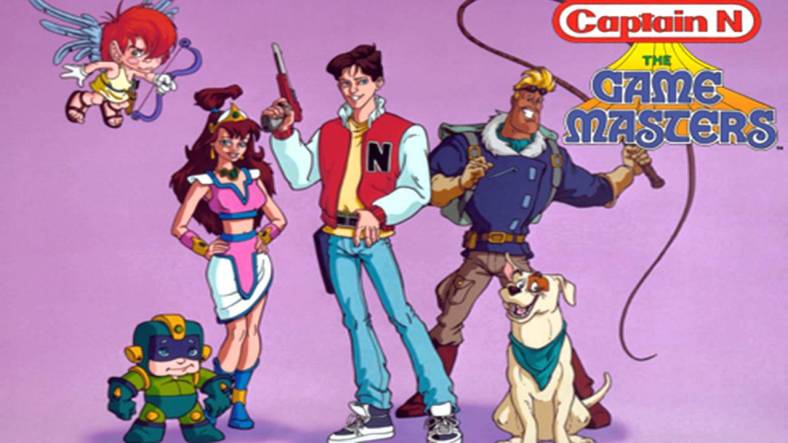
Wrong again, but you’re getting warmer. In addition to the aforementioned cartoon segments, this show featured a live-action host and game show elements.
OK, I’ll turn over all the cards. The show in question is Video Power, an American television series that aired in two different formats from 1990-1992 in syndication.

Both formats of Video Power revolved around video games, and actor Stivi Paskoski presided over both series playing video game master Johnny Arcade, of the South Hampton Arcades, no doubt.
Season 1 Intro:
“DUUUUUDE! That was Funky, Funky Fresh!”
The first format of Video Power consisted of both live-action segments and cartoon segments from the Acclaim Entertainment-produced series, The Power Team.
The cartoon was an adventure featuring Johnny Arcade and a team of heroes from different NES games and a Game Boy game published by Acclaim: Max Force, a policeman from NARC; Kuros, the knight from Wizards and Warriors; Tyrone, a basketball player from Arch Rivals, because we all know how well pro athletes work as superheroes…


“LAME!”
Kwirk, a tomato from the game of the same name;

“In that opening, Kwirk jumps out of an NES, but the game Kwirk was exclusive to the Game Boy! Johnny Arcade is a big fat lair!!”
…and Bigfoot, a monster truck that had its own video game. Yes, the monster truck was a member of the team.
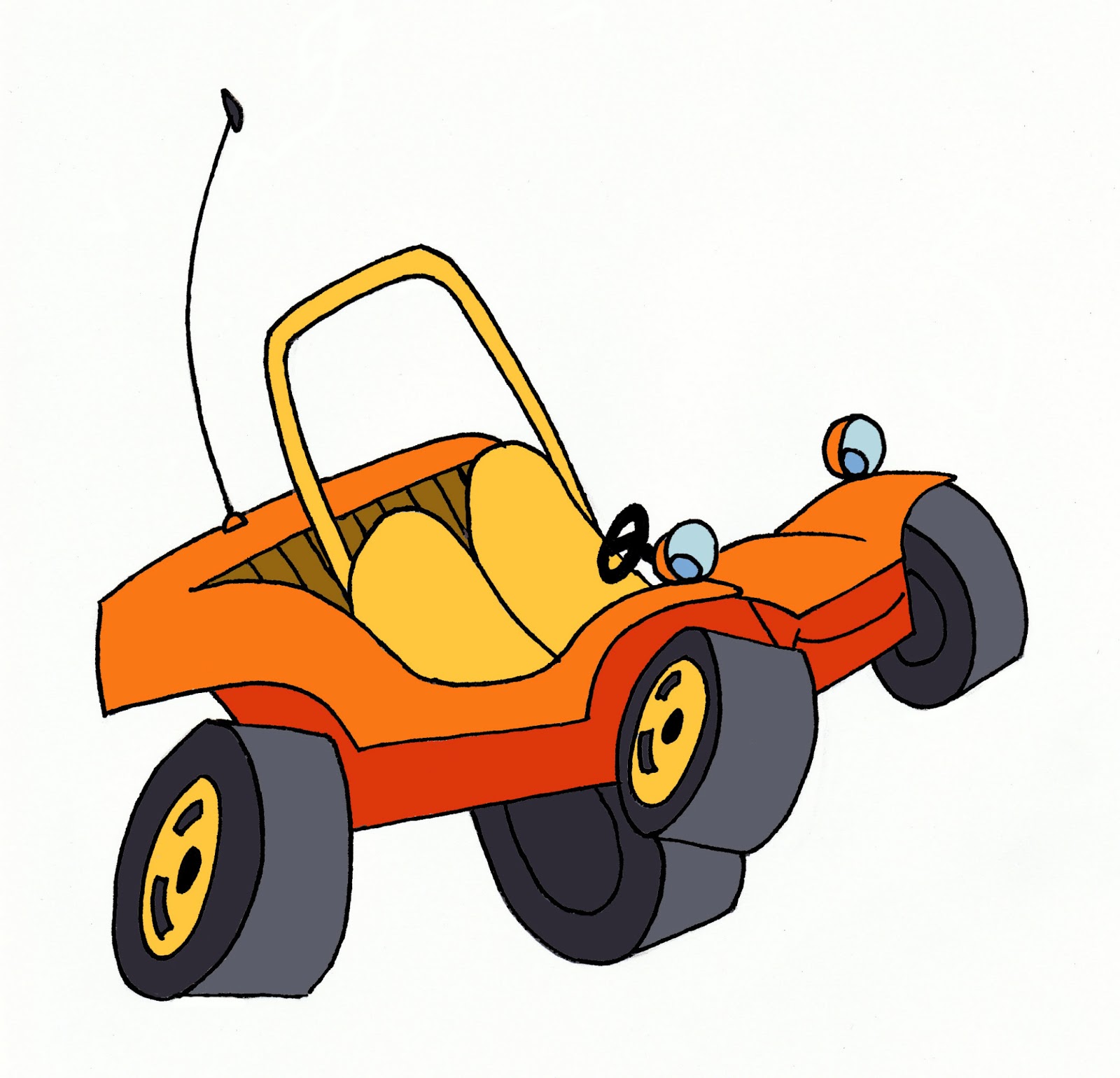
“What’re you sayin’, buddy? That vehicles aren’t essential to the team dynamic? Well, good luck walking to your next mission, smart guy!”
***************************************************************
The main enemy of each episode was mostly Mr. Big and his thugs, Joe and Spike, from NARC, while Malkil from Wizards and Warriors sometimes appears with the villains of NARC.

“Poseurs! If we suck so much, then why are these guys trying to rip us off?”
*****************************************************************
In the live action segments, Mr. Arcade would review and preview games that were currently out or forthcoming for consoles, as well as giving hints and tips for gamers that were having trouble achieving certain tasks in games. Sometimes he would go to an expo or a convention to show the booths of forthcoming titles. Viewers were also able to write into the show to receive hints.
For the show’s second season which began in the fall of 1991, the producers of Video Power completely overhauled its format and opening.

“DUUUUDE! the first theme was awesome, but that theme was TOTALLY BODACIOUS TO THE MAX!!!”
The Power Team were given the pink slip and the series was turned it into a game show. Johnny was joined by Terry Lee Torok, who served as his co-host and did more actual hosting that Arcade did, and Steve Treccase, the former Remote Control keyboardist who served as the leader of an in-house band that was added to the show as well. The game consisted of kids in the audience putting “Johnny on the spot” by asking him questions, a round of video game playing, a quiz, more game playing and a prize round. The winning player would….
…You know what? Who cares? This show was just 90’s cheese. That’s really all you need to know. Video Power was a very 90’s video game cash-in show. End of story. I’m out.


“HA-HA! In your face, producers!”

“Word??”
Player Two Start!: A Salute to TMNT: Turtles In Time
Today, we’re going to look back at the 1991 Konami arcade video game Teenage Mutant Ninja Turtles; Turtles in Time.
.jpg)
Teenage Mutant Ninja Turtles: Turtles in Time, released as Teenage Mutant Hero Turtles: Turtles in Time in Europe, is an arcade video game produced by Konami. A sequel to the original Teenage Mutant Ninja Turtles (TMNT) arcade game, it is a scrolling beat ’em up type game based mainly on the 1987 TMNT animated series. Originally an arcade game, Turtles in Time was ported to the Super Nintendo Entertainment System in 1992, whereupon it was retitled to serve as a sequel to Teenage Mutant Ninja Turtles III: The Manhattan Project. That same year, a game that borrowed many elements, Teenage Mutant Ninja Turtles: The Hyperstone Heist was released for the Mega Drive/Sega Genesis. Here’s the game’s intro:
My first ever exposure to Turtles in Time was when I saw it in the arcade at The Center at Salisbury, Maryland (The Center is the name of the main mall there). I saw it there, but I wouldn’t actually play the game until my younger brother Chaz (aka, CJP on The Otaku Gamer Spot) rented and later purchased the home version of the game for the SNES. He was a major TMNT fan at the time, while I myself was mostly a casual fan. being a child of the ancient 1970s, I was 18 when Teenage Mutant Ninja Turtles debuted in syndication in 1987, so most of what I knew about TMNT, I knew from Chaz. Apart from the TMNT arcade game, which was never released to any home consoles, I’ve played Turtles in Time more than any other TMNT title. I’ve only played TMNT III: The Manhattan Project once when Chaz borrowed the game from a friend of his, and we rented The Hyperstone Heist of couple of times from Blockbuster Video (remember when Blockbuster stores were around?).
TMNT: Turtles in Time is probably the closest you’ll ever get to playing the arcade classic. Like the arcade game, you can play as all 4 Turtles (Leonardo, Donatello, Raphael and Michelangelo). Of course, in the SNES version, you only get 2 controllers, so you can only play as 2 Turtles at a time, but Chaz later streamed a PC version of the game where all 3 of us could play at once. Both Damon and myself have played as Leonardo, Raphael and Michelangelo, but neither of us has ever played as Donatello. Donatello was always Chaz’s favorite Turtle, and still is to this very day, so whenever we would play Turtles in Time, Chaz would always play as Donatello, no matter what, and we respected that.
Anyway, the story of the game is pretty basic: Shredder kidnaps April and the Turtles go to her rescue. After the first couple of levels which are very reminiscent of the arcade game, Shredder sends the Turtles “…through a time portal from which you will never return!”, and the Turtles play through different periods of history as levels before the final confrontation with Krang and then with Shredder (at least until the next game) in the Technodrome. The time levels were an interesting mix; ranging from prehistoric times, the old West and not 1 but 2 future levels. The background music for “Bury My Shell at Wounded Knee” and “Neon Night Riders” is, in my opinion, the best music in the game. I have both tracks on my mp3 player.
Give a listen:
My only complaint is that there were some other time periods that I would have liked to have seen used in the game. a Medieval Europe level, an ancient Rome level or a Colonial America level would have been nice to see.
I’ve played through Turtles in Time many times. If you know the cheat code which gives your characters 99 lives, you can easily go through the game without having to continue. What I liked most about Turtles in Time is the afternoons that I’ve spent playing the game with my brothers. It was actually a bonding experience for us and it helped me and my kid brother become closer as people.

Yeah, I know it’s corny, but too bad. This is how I’m ending this. Here’s to you, TMNT: Turtles in Time.
SAAAAAA-LUUTE!
Player Two Start!: A Salute to World Heroes
Hello and welcome to a new segment on Twinsanity called Player Two Start!, where we pay tribute to the video games we spent our misspent youth playing.
-OK, it’s not really so much a new segment: Jason (Goldstar) did a video game salute waaaay back in the first year of this blog in 2010, back when the blog was called Astral City (Astral City? Yech! What were we thinking?!), but recently I decided to do a game salute myself, and since there’s now more than one, these game salutes can now become a recurring segment here. Why? Why not?
As with the previous Player Two Start entry, this is not a review. We don’t do game reviews here. There are already dozens of video game reviewers on the interwebz, both for new games and for retro/classic games, and all of them review games 20 times better than we ever could, so no lengthy detailed reviews from us. We just like to look back fondly on some of our favorite titles from time to time.
Today we’ll be looking at ADK’s lesser-known fighting game franchise, World Heroes.

World Heroes was a series of fighting games created by ADK originally created for the Neo Geo MVS arcade cabinets with the assistance of SNK, though some of the games in the series were also ported to the Neo Geo AES and Neo-Geo CD platforms, as well as some non-SNK platforms such as the Super NES and the Sega Saturn. First launched in 1992, it was one of several Street Fighter 2 clones of its’ day. While World Heroes didn’t have the excitement factor of SF2 or the blood ‘n’ gore factor of Mortal Kombat, or even the weapons melee factor of Samurai Shodown, WH had a standout feature of its’ own: goofy humor, crazy oddball characters and wacky extreme super moves. The premise of the the WH franchise (such as it is) is that a scientist named Dr. Brown (after Christopher Lloyd’s character in the Back to the Future movies, get it?), having perfected a time machine, organized a tournament for various fighters throughout all of history to combat each other. True to this plot, many of the fighters are based on actual historical figures, while some are fictional ones.
Games in the the World Heroes series:
- World Heroes (1992)
- World Heroes 2 (1993)
- World Heroes 2 Jet (1994)
- World Heroes Perfect (1995)
- World Heroes Anthology (US title)/World Heroes Gorgeous (Japan title–yes, it was really called World Heroes Gorgeous, 2007)
In the first game, as was the case with many SF2 clones, there were 8 selectable characters: Hanzo, the Ryu of this game, a ninja based on the legendary ninja warrior Hanzo Hattori, Fuuma, Hanzo’s chief rival (imagine if Ryu and Ken were ninjas from rival clans and hated each others’ guts), based on based on the actual Fūma Kotarō, who allegedly killed the real Hanzo; in the ADK-verse, Fuuma stays in the present and becomes a office wage slave in a tiny cubicle–what?? as well as appearing in ADK’s Aggressors of Dark Kombat (its’ initials spell ADK–get it? GET IT???), Janne D’Arc, a 15th century French fencer based on Joan of Arc whose main goals are to be the strongest of all and to find a man (yay, feminism!), Kim Dragon, the resident “I wanna be like Bruce Lee!” character, J. Carn, the personal bodyguard of Ghenghis Khan, who becomes a tyrant in his own right, Muscle Power, a 20th century professional wrestler who bears more than a passing resemblance to Hulk Hogan, receding hairline and all, Rasputin, based on the philosopher of 13th century Russia, here portrayed as a sorcerer who preaches peace and love, and as the series progresses, becomes a full-blown homosexual stereotype (check out his Desperation Move in the video at 1:35 below for proof) and Brocken, imagine if someone combined the character Brockenman from the anime Kinkiuman with The Terminator, resulting in a uniformed German officer who also happens to be a killer cyborg from a dystopian future. The boss of the game was a character named Geegus, an obviously inspired by the T-1000 cyborg that was created by a secret organization called DAMD who can shapeshift into any of the eight fighters and use their moves at will. Geegus wants to destroy the Earth (hey, you’d want to destroy stuff too if your name was Geegus), so the World Heroes tournament was created to stop Geegus’ evil plans. I told you this game was wacky.
In the second installment, called–imaginatively enough–World Heroes 2, 6 more characters were added: Captain Kidd, a pirate based on the infamous William Kidd, wielder of shamanistic energy sharks and pirate ships hurled from his knuckles and possessor of one THE coolest video game stage tunes of all time, Erick, a viking based on Erik the Red, Johnny Maximum, a football pro based loosely on Joe Montana, described as a “killer machine” and a “demon quarterback” thanks to his cryptic dialogue and creepy glowing red eyes beneath his ever-present helmet, Mudman, a Pacific Islander wizard with a large wooden mask and no real historical basis apart from appearing primitive, Ryoko, a teenage Judo queen based on real-life judoka Ryoko Tamura (now Ryoko Tani) and Shura, a 25 year old Muay Thai fighter who has joined the tournament to prove his worth to his feared dead older brother (even though his brother is actually alive and well). The boss of this game is a alien being named Dio, described as “The Ultimate Thing”, while Geegus is reduced to sub-boss, but receives an upgrade to ‘Neo-Geegus’.
The third installment, actually an upgrade called World Heroes 2 Jet, introduced 3 new characters: Jack, think punk-rock Jack the Ripper, a punk serial killer with claws on his hands, Ryofu, a Chinese warrior based on the warlord Lü Bu of the Three Kingdoms era, and a new boss named Zeus, a musclebound loony with some of the worst cut-scene dialogue ever typed. The final new game in the series, World Heroes Perfect, introduced a sole new character, Son Goku, based on the famous mythological character Sun Wukong from “Journey to the West” (no, not the star of Dragon Ball, though that would’ve been a heckuva crossover). It also features an interesting final boss fake-out: in the final bout, you face off against Zeus from WH2 Jet for one round, at the start of round 2, Zeus then gets trashed by the true final boss, an upgraded Dio now called Neo-Dio. (Question: if Dio is “the Ultimate Thing”, then why did he even need to go Neo??)
While World Heroes never achieved the success or notoriety of Street Fighter or Mortal Kombat, it nonetheless had its’ charms, such as boasting some truly awesome music. Give a listen to some of these tracks:
And I’m pretty sure that WH was the first fighting game ever to depict the Industrial Revolution as a stage setting:
How can you not love win quotes like these:
..Or super moves like these?
Or kooky cheeseball endings like these?
Idly, one has to wonder why this series has yet to receive a revival, in this age of old game franchises getting reboots and relaunches. If the old Capcom DuckTales game for the NES has gotten a new version released, why the heck has no one tried to revive World Heroes? A new WH game with those nutty moves and quotes, done in the Street Fighter 4 style? I’d play that; wouldn’t you?
So here’s to you, World Heroes. You may not have gotten the attention or the accolades of other fighting games of your time, but when I was bored in my living room playing video games, you gave me a good chuckle and killed a tedious afternoon, and for that, we at Twinsanity salute you.
SAAAAA-LUTE!
 Twin Images

You must be logged in to post a comment.